The Ultimate Carnivore Feast
Honestly, after spending hours staring at a screen editing video assets and churning out new content, the last thing I want to do is babysit a traditional outdoor smoker all day. But I still usually crave a massive, high-protein meal that will keep me fueled for my next project and make both my sister-in-law and my daughter absolutely thrilled at the dinner table. That’s exactly how I ended up mastering this “cheat” indoor BBQ method.
Ingredients You’ll Need
To recreate the star of this board—the oven-smoked brisket—and pull the whole platter together, here is what you need:
For the Oven-Smoked Brisket:
1 (4-5 lb) beef brisket (flat cut): Trimmed of heavy excess fat, but leave a small cap for flavor and moisture.
2 tbsp smoked paprika & 1 tbsp garlic powder: For that classic BBQ color and savory depth.
1 tbsp onion powder & 1 tsp mustard powder: Adds a nice tang to the bark.
1 tbsp coarse sea salt & 1 tbsp freshly cracked black pepper: Crucial for a good crust.
1 cup high-protein beef bone broth: Keeps the meat incredibly moist during the long cook.
1 tbsp liquid smoke (hickory or mesquite): The secret ingredient to getting that outdoor pit flavor indoors!
To Complete the Board:
4-6 pre-cooked smoked beef or pork sausages: Bratwurst or hot links work great.
(Optional) 1 lb pre-cooked pulled pork or shredded beef: Just to really recreate that epic platter vibe!
Step-by-Step Method
Prep the Spice Rub: In a small bowl, whisk together the smoked paprika, garlic powder, onion powder, mustard powder, coarse salt, and black pepper.
Season the Meat: Pat your brisket completely dry with a paper towel. Rub the spice mixture generously all over the meat, pressing it firmly into the flesh so it sticks. If you have time, let it sit in the fridge uncovered overnight to really lock in the flavors, but you can also cook it immediately.
Create the Braising Liquid: Preheat your oven to a low and slow 275°F (135°C). In a small cup, mix the beef bone broth with the liquid smoke.
Wrap and Roast: Tear off two large sheets of heavy-duty aluminum foil. Place the seasoned brisket in the center. Carefully pour the broth and liquid smoke mixture around the base of the meat. Tightly wrap the foil around the brisket to create a sealed pouch, trapping all the steam and moisture. Place it on a baking sheet or roasting pan.
Low and Slow: Bake in the oven for about 4 to 5 hours. You want the meat to reach an internal temperature of about 200°F (93°C). It should feel like butter when you poke it with a fork.
Form the Bark: Carefully remove the brisket from the foil, reserving those amazing pan juices. Place the meat back on the baking sheet uncovered, and crank the oven to 400°F (200°C) for 10-15 minutes to crisp up the outside crust (the “bark”).
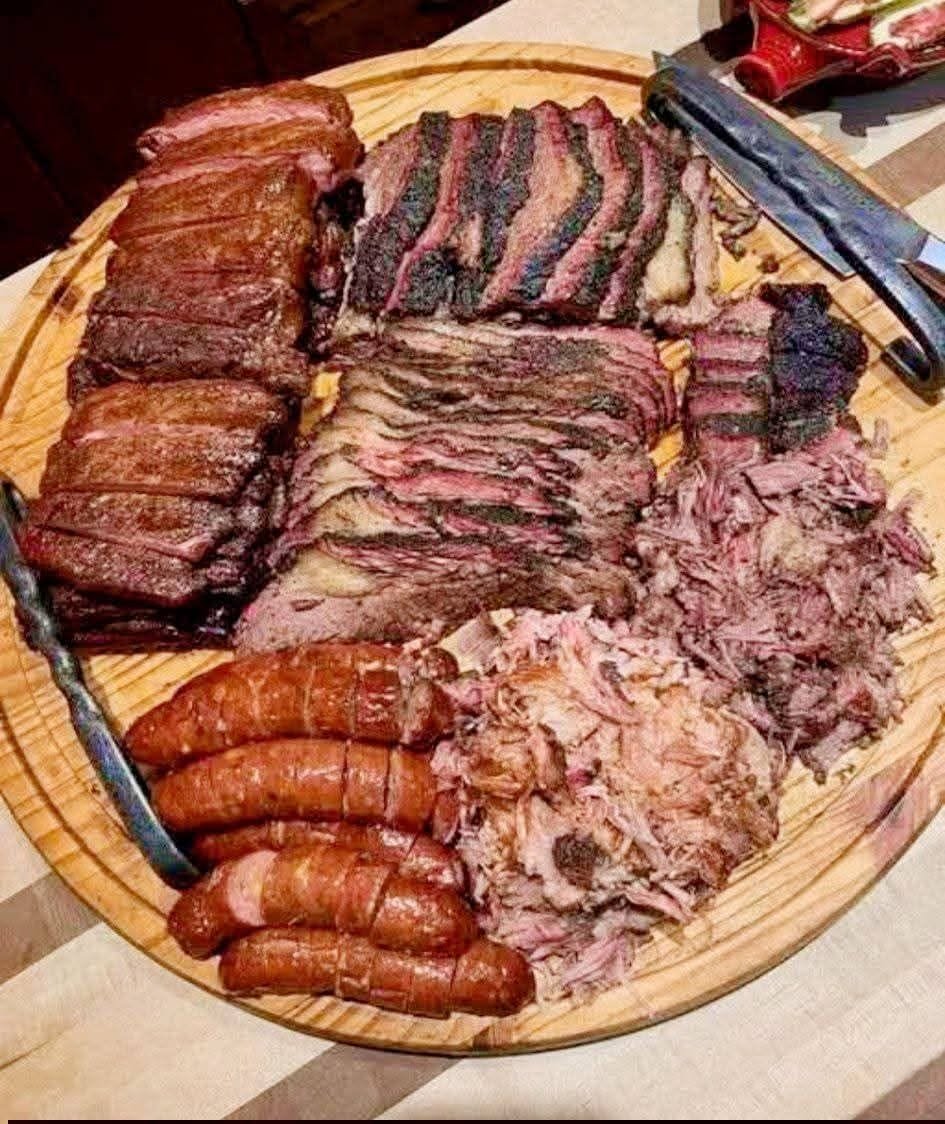
Sausages and Assembly: While the brisket rests, toss your smoked sausages into a hot cast-iron skillet for 5-6 minutes until they are blistered and heated through. Slice the rested brisket against the grain and arrange it on a giant wooden cutting board alongside the sausages and shredded meats!
My Top Cooking Tips
Always slice against the grain: If you look at your brisket, you’ll see long muscle fibers running in one direction. Always cut perpendicular to those lines. Honestly, if you cut with the grain, your meat will be incredibly tough and chewy, no matter how long you cooked it!
Do not skip the resting phase: Let that brisket rest on a cutting board for at least 30 minutes before taking a knife to it. This lets all the juices redistribute into the meat.
Save the foil juices: The liquid leftover in the foil pouch is liquid gold. I usually pour it into a small bowl and serve it alongside the board as a high-protein dipping sauce or gravy.
Serving Suggestions
Because this massive meat board is incredibly heavy on the proteins and fats, I usually like to balance it out with some sharp, acidic sides. Serve this platter with a side of crunchy dill pickles, pickled red onions, and some spicy brown mustard. If you aren’t strictly keto or carnivore, some classic baked beans or a fresh, tangy vinegar-based coleslaw cuts right through the richness of the BBQ.
Approximate Nutrition Info (Per Serving)
(Note: Makes about 8 servings. Macros reflect a 6 oz portion of brisket and one sausage link).
Calories: 580 kcal
Protein: 52g
Carbohydrates: 2g
Fat: 38g
Conclusion
There you have it—a colossal, macro-friendly BBQ feast that doesn’t require standing outside over a smoker for 14 hours! Honestly, arranging a massive board of perfectly cooked brisket, sausages, and pulled pork makes any regular weeknight dinner feel like an absolute celebration. Grab a cutting board, heat up the oven, and treat yourself to this ultimate carnivore spread this weekend!
Frequently Asked Questions (FAQs)
1. Do I really need to use liquid smoke? If you are cooking indoors and want that authentic BBQ flavor, liquid smoke is highly recommended! It is just condensed smoke from actual burning wood. However, if you really dislike it, the smoked paprika will still give the meat a nice, subtle smoky flavor on its own.
2. Can I use a slow cooker instead of the oven? Absolutely! You can place the seasoned brisket and the broth mixture into a slow cooker and cook on LOW for 8-10 hours. Just be sure to transfer it to a baking sheet and broil it for a few minutes at the end to get that crusty exterior!
3. What is the best way to reheat leftover brisket? Brisket can dry out easily when reheated. I usually slice it and gently warm it in a skillet over medium-low heat with a splash of beef broth. Cover it with a lid to let the steam gently heat the meat through without drying it out.
4. Are sausages macro-friendly? It depends on the brand! Look for high-quality sausages made without added sugars, corn syrup, or excessive fillers. Chicken or turkey sausages are a fantastic lean option if you want to keep the fat macros down.
5. Why did my brisket turn out tough? Tough brisket usually means it was either undercooked or sliced incorrectly. Brisket has a lot of connective tissue that needs a long time at a low temperature to break down. If it is tough, it probably needed another hour in the oven! And always remember to slice against the grain!