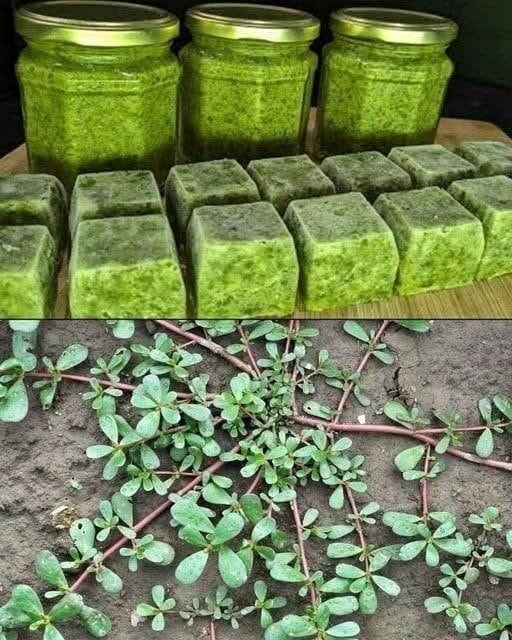
These Anti-Inflammatory Mediterranean Purslane Herb Cubes are one of those recipes that you almost unintentionally include into your weekly routine.
Fresh purslane was growing down the edge of one of the raised beds last weekend when my family and I spent the afternoon tidying up the garden. Because she used it in soups, salads, and stews when she was younger, my grandmother would refer to it as a “hidden treasure” every time. Before a close friend suggested making herb cubes for easy dinners, I had never considered freezing it. I’m so happy that I chose to give it a shot..
Anti-Inflammatory Mediterranean Purslane Herb Cubes (Freezer Recipe)
These vibrant green Mediterranean Purslane Herb Cubes are a simple make-ahead ingredient packed with fresh herbs, healthy fats, and antioxidant-rich vegetables. Inspired by Mediterranean flavors, these frozen cubes can be added to soups, sauces, grains, eggs, roasted vegetables, or marinades for an instant burst of flavor and nutrition.
Note: The plant shown in your image appears to be purslane (Portulaca oleracea), an edible leafy succulent. If harvesting wild purslane, be certain of the identification before eating, as some look-alike plants are not edible.
What Makes Purslane Special?
Purslane is one of the few leafy vegetables naturally containing plant-based omega-3 fatty acids (ALA). It also provides:
- Vitamin A
- Vitamin C
- Vitamin E
- Magnesium
- Potassium
- Calcium
- Iron
- Antioxidants like beta-carotene and betalains
Combined with olive oil, garlic, parsley, and lemon, these cubes create a flavorful Mediterranean blend that may support a balanced diet.
Ingredients
- 4 cups fresh purslane leaves and tender stems, washed
- 1 cup fresh parsley
- ½ cup fresh cilantro (optional)
- 6 garlic cloves
- ½ cup extra virgin olive oil
- Juice of 1 lemon
- 1 teaspoon sea salt
- ½ teaspoon black pepper
- 1 teaspoon dried oregano
- ½ teaspoon turmeric (optional)
- ¼ teaspoon crushed red pepper flakes (optional)
- 2 tablespoons water (if needed for blending)
Instructions
Step 1: Prepare the Herbs
Wash purslane thoroughly to remove dirt and grit. Pat completely dry.
Step 2: Blend
Add all ingredients to a blender or food processor.
Blend until smooth but slightly textured.
If the mixture is too thick, add 1–2 tablespoons of water.
Step 3: Freeze
Pour into silicone ice cube trays.
Freeze for 4–6 hours or overnight.
Step 4: Store
Transfer frozen cubes into freezer-safe bags or airtight containers.
Store for up to 3 months.
Serving Suggestions
Use 1–2 cubes for:
- Vegetable soups
- Chicken soup
- Lentil soup
- Pasta sauces
- Stir-fries
- Omelets
- Scrambled eggs
- Rice
- Quinoa
- Couscous
- Roasted vegetables
- Salad dressings
- Marinades
- Baked fish
- Grilled chicken
- Bean dishes
- Homemade hummus
Delicious Variations
Mediterranean Version
- Add basil
- Fresh oregano
- Mint
Spicy Version
- Jalapeño
- Cayenne
- Extra chili flakes
Creamy Version
Blend with:
- Greek yogurt
- Tahini
- Avocado
Green Detox Version
Add:
- Spinach
- Kale
- Celery
- Cucumber
Italian Herb Cubes
Include:
- Basil
- Thyme
- Rosemary
- Parmesan (add after thawing)
Storage Tips
- Refrigerator: 3–4 days
- Freezer: Up to 3 months
- Store in airtight freezer bags to reduce freezer burn.
- Label with the preparation date.
Nutrition (Approximate Per Cube)
- Calories: 35
- Fat: 3 g
- Protein: 0.5 g
- Carbohydrates: 1.5 g
- Fiber: 0.5 g
- Vitamin A: 15% DV
- Vitamin C: 10% DV
- Omega-3 (ALA): Small amount (varies with purslane)
- Sodium: Depends on added salt
Nutrition values are estimates and vary with ingredient amounts and cube size.
Health Notes
These cubes include ingredients commonly associated with a healthy dietary pattern:
- Purslane: Source of ALA omega-3s, vitamins, and antioxidants.
- Extra virgin olive oil: Rich in monounsaturated fats and polyphenols.
- Garlic: Adds flavor and contains sulfur-containing compounds.
- Parsley: Provides vitamins A, C, and K.
- Lemon: Contributes vitamin C and bright acidity.
- Turmeric: Contains curcumin, though absorption is enhanced when consumed with fat and black pepper.
While these ingredients can be part of an anti-inflammatory eating pattern, no single food or recipe can prevent or treat inflammation-related diseases on its own.
Frequently Asked Questions
Can I eat purslane raw?
Yes. Young, properly identified purslane can be eaten raw in salads or blended into sauces after washing thoroughly.
Can I freeze fresh purslane?
Yes. Freezing is a convenient way to preserve purslane for several months with good flavor retention.
Is purslane healthier than spinach?
Purslane and spinach have different nutrient profiles. Purslane is notable for containing more plant-based omega-3 (ALA), while spinach is especially rich in folate and certain minerals.
Can I use these cubes every day?
For most people, using a cube or two as part of a varied diet is reasonable. If you have kidney stones, kidney disease, or take blood-thinning medication, ask your healthcare provider whether large amounts of leafy greens are appropriate for you.
What foods pair well with purslane?
- Tomatoes
- Cucumbers
- Feta cheese
- Chickpeas
- Lentils
- Olive oil
- Lemon
- Grilled fish
- Chicken
- Eggs
Final Thoughts
Mediterranean Purslane Herb Cubes are an easy meal-prep recipe that helps preserve fresh herbs while adding bright flavor to everyday meals. They can be stirred into soups, grains, vegetables, and proteins for a convenient way to enjoy purslane throughout the year. For the best nutritional value and food safety, use fresh, correctly identified purslane, wash it thoroughly, and keep the cubes frozen until ready to use.