Making a simple cup of herbal tea with fresh leaves has a reassuring quality. A few leaves, water, and some time are all you need—no sophisticated equipment or lengthy list of ingredients.
I first learned about soursop leaf tea, also known as graviola tea, from a friend. Although I had seen soursop fruit many times, I had never considered making a warm beverage with the leaves. I made the decision to try it with my family last weekend.,,
Boiled Soursop (Graviola) Leaf Tea
Soursop leaf tea is a traditional herbal infusion made from the leaves of Annona muricata, also known as graviola or guanabana. It has been traditionally used in some cultures for general wellness and inflammation. Laboratory and animal research has found potentially anti-inflammatory and antioxidant effects, but there is not enough human evidence to establish soursop leaf tea as an effective anti-inflammatory treatment.
Ingredients
- 5–10 fresh, young soursop leaves
- 4 cups (about 1 liter) filtered water
- Optional: a small piece of fresh ginger
- Optional: lemon or lime for flavor
- Optional: a small amount of honey
Preparation
- Wash the leaves thoroughly under running water.
- Remove any damaged or discolored portions.
- Place the leaves in a saucepan with 4 cups of water.
- Bring the water to a gentle boil.
- Reduce the heat and simmer for approximately 7–10 minutes.
- Turn off the heat and allow the tea to steep for another 5–10 minutes.
- Strain the leaves.
- Serve warm, or refrigerate the strained tea and serve chilled.
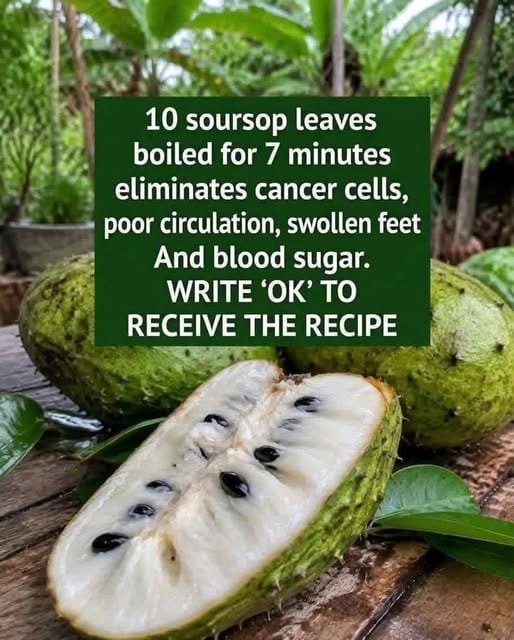
Important: The viral image’s claim that boiling 10 leaves for 7 minutes “eliminates cancer cells” is not supported by clinical evidence. Laboratory studies have investigated anticancer activity of graviola extracts, but this does not demonstrate that drinking the tea treats or cures cancer in humans.
Serving Suggestions
- Warm: Enjoy as a caffeine-free herbal beverage.
- Iced: Chill and serve over ice with lemon or lime.
- Ginger: Add a small piece of ginger while simmering for a spicier flavor.
- Citrus: Add lemon or lime after the tea has cooled slightly.
- Sweetened: If desired, use a small amount of honey.
For a wellness-oriented beverage, avoid presenting it as a replacement for prescribed medication or medical treatment.
Variations
Soursop & Ginger Tea
Add 2–3 thin slices of fresh ginger during simmering.
Soursop Citrus Tea
Add fresh lemon or lime juice after straining.
Iced Soursop Tea
Cool completely, refrigerate, and serve over ice with citrus.
Herbal Blend
You can experiment with culinary herbs such as ginger or mint for flavor, rather than increasing the amount of soursop leaves.
Nutrition
Plain soursop leaf tea is not a meaningful source of calories, protein, carbohydrates, fiber, vitamins, or minerals, because relatively little of the plant’s nutritional content necessarily transfers into the water.
The nutritional profile is therefore very different from eating soursop fruit, which provides carbohydrates, fiber, vitamin C, and other nutrients.
There is also no established nutrition label or standardized dose for homemade soursop leaf tea.
Potential Anti-Inflammatory Benefits
Soursop is often marketed online for anti-inflammatory benefits, antioxidant activity, blood sugar management, immune support, detoxification, and cancer prevention. Some of these effects have been observed in laboratory or animal research, but human evidence remains limited.
So it is more accurate to describe this as a traditional herbal tea with potential anti-inflammatory properties under investigation, rather than an evidence-based anti-inflammatory treatment.
Safety Notes
This is especially important with herbal remedies:
- Soursop/graviola may lower blood sugar and blood pressure, which could potentially interact with diabetes or blood-pressure medicines.
- Concentrated supplements and extracts can differ substantially from a homemade tea.
- People receiving cancer treatment should discuss graviola with their oncology team rather than using it as an alternative therapy. There is currently no clinical evidence that graviola treats cancer.
- If you are pregnant, breastfeeding, taking prescription medication, or considering regular/high-dose use, speak with a healthcare professional first.
Related Questions
Does soursop leaf tea cure cancer?
No. There is laboratory research on compounds in graviola, but clinical evidence showing that soursop leaf tea treats or cures cancer is lacking.
Is soursop leaf tea anti-inflammatory?
It has shown anti-inflammatory activity in preclinical research, but its effectiveness as an anti-inflammatory treatment in humans has not been established.
Can soursop tea lower blood sugar?
It may have blood-sugar-lowering effects, but this should not be relied upon as diabetes treatment. It could also interact with glucose-lowering medication.
Can I drink it every day?
There isn’t a well-established evidence-based daily dose for homemade soursop leaf tea. Regular medicinal use is best discussed with a healthcare professional.
Is soursop fruit different from soursop leaves?
Yes. Soursop fruit is commonly eaten as food, whereas leaves are used in traditional remedies and contain different plant compounds.
Final Thoughts
Soursop leaf tea can be presented as a traditional herbal beverage, but viral health posts often go far beyond the available evidence. The most responsible approach is to enjoy it for its flavor and traditional use while avoiding claims that it cures cancer, reverses diabetes, removes swelling, or replaces medical treatment.