The aroma of fresh lemons instantly brightens my kitchen for some reason. A friend told me a few weeks ago that she dries her lemon peels and uses them to make homemade lemon powder instead of throwing them out. I was genuinely curious as to why I hadn’t considered it earlier!
I made the decision to give it a try with my family last weekend. Rather of discarding the peels of the few lemons we had in the fruit bowl after consuming the juice,,
Homemade Lemon Powder (Lemon Peel Powder) — Antioxidant & Anti-Inflammatory Food
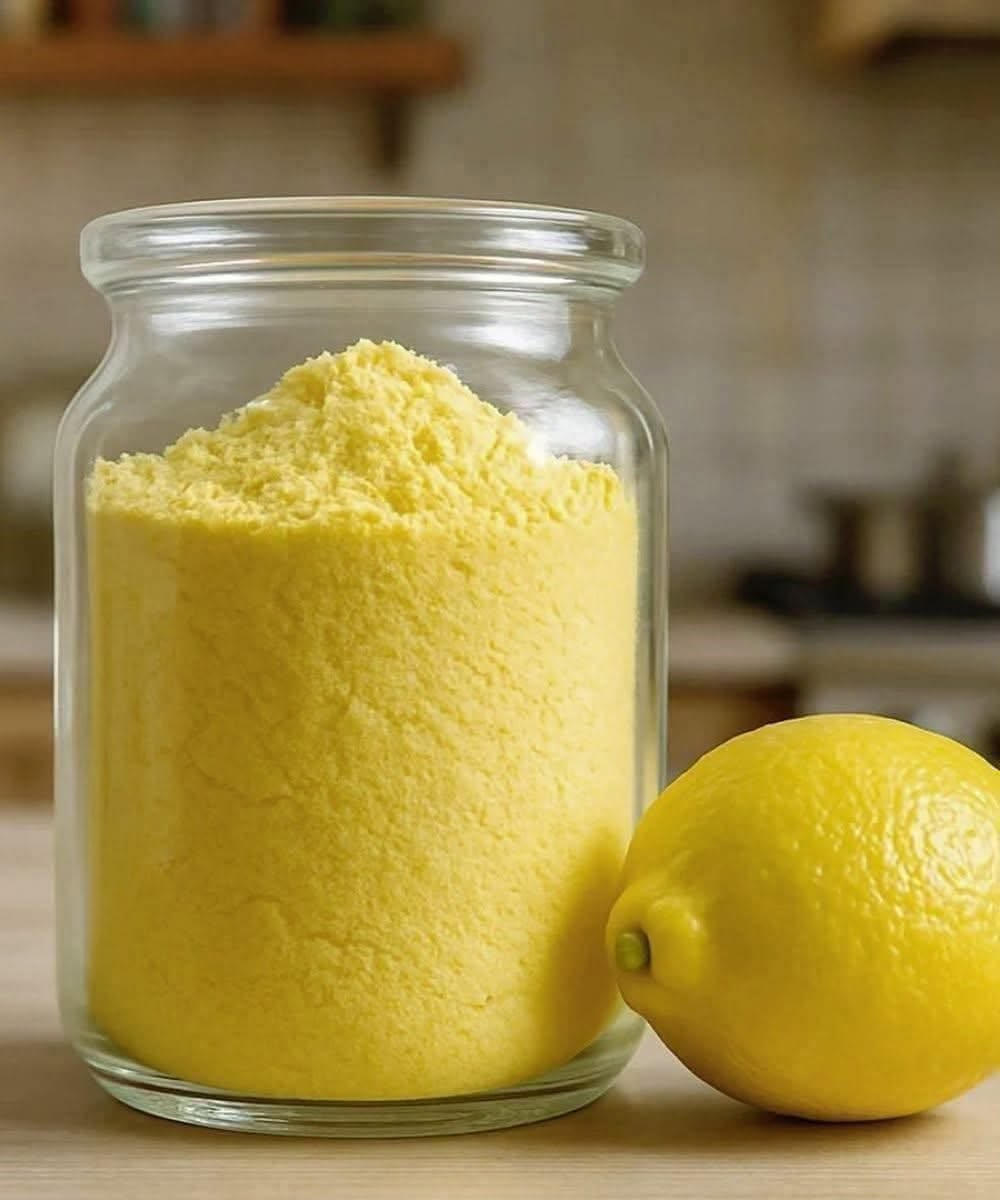
This homemade lemon peel powder is an easy zero-waste kitchen ingredient made by drying and grinding lemon peel. It has a bright citrus flavor and can be added to tea, smoothies, yogurt, oatmeal, salad dressings, marinades, and baked goods.
Lemon peel contains dietary fiber and citrus flavonoids, including hesperidin, eriocitrin, naringenin, quercetin, and other polyphenols. Research on citrus flavonoids suggests antioxidant and anti-inflammatory activity, particularly in laboratory and preclinical studies. However, lemon powder should not be considered a treatment for inflammation or a substitute for medical care; human evidence for specific anti-inflammatory benefits from homemade lemon-peel powder remains limited.
🍋 Recipe at a Glance
Recipe: Homemade Lemon Peel Powder
Prep time: 10–15 minutes
Drying time: 2–8 hours, depending on method
Yield: Approximately 2–4 tablespoons from several lemons
Storage: About 1–3 months in a clean, completely dry airtight container
Best for: Tea, smoothies, baking, marinades, yogurt, oatmeal and seasoning
Ingredients
- 5–8 fresh lemons
- Optional: a small amount of food-safe lemon zest only, if you prefer a less bitter powder
Choosing the lemons
Use fresh lemons with clean, healthy skins. Since you’re consuming the peel, wash them thoroughly and choose fruit from a source you trust.
For a more aromatic powder, use the yellow outer zest. Including a lot of the white pith produces a more bitter, earthy powder but also contributes additional fiber and citrus compounds.
How to Make Lemon Peel Powder
1. Wash the lemons
Wash and scrub the lemons thoroughly under running water. Dry them completely with a clean towel.
2. Peel or zest
Use a vegetable peeler, fine grater, or zester.
For a sweeter, more versatile powder, remove mostly the yellow outer layer and minimize the thick white pith.
3. Dry the peel
Spread the pieces in a single layer.
Oven method:
- Set the oven to its lowest practical temperature, around 150–170°F (65–75°C).
- Dry for approximately 2–4 hours, checking periodically.
- The peel should become completely dry and brittle.
Food dehydrator:
- Dry around 115–135°F (45–57°C) until crisp.
- This can take approximately 4–8 hours, depending on thickness and humidity.
Air-drying:
- Spread the peel in a clean, well-ventilated location.
- Allow it to dry completely until crisp.
- This can take several days and is more dependent on humidity.
Important: The peel must be completely dry before grinding. Any remaining moisture can encourage mold during storage.
4. Cool completely
Allow the dried lemon peel to cool to room temperature.
5. Grind
Transfer the dried peel to a clean spice grinder, coffee grinder, or high-powered blender.
Pulse until you obtain a fine lemon powder.
6. Store
Place the powder in a clean, completely dry airtight glass jar.
Store it in a cool, dark, dry cupboard. For the best flavor, make relatively small batches and discard it if you notice moisture, mold, an unusual smell, or significant changes in appearance.
How to Use Lemon Peel Powder
Start with ¼ teaspoon and increase according to taste.
🍵 Lemon Anti-Inflammatory Tea
Add:
- ¼–½ teaspoon lemon peel powder
- 1 cup hot water
- Optional ginger
- Optional cinnamon
- Optional honey
Steep for several minutes and stir well.
This makes a flavorful citrus herbal-style drink. It is better described as a nutrient-rich beverage, rather than an anti-inflammatory treatment.
🥣 Breakfast
Add ¼ teaspoon to:
- Oatmeal
- Chia pudding
- Greek yogurt
- Granola
- Smoothies
- Overnight oats
🥗 Salad Dressing
Combine:
- 1 tablespoon olive oil
- 1 tablespoon lemon juice
- ¼ teaspoon lemon peel powder
- Black pepper
- Optional garlic
- Optional honey
Whisk and drizzle over salad or roasted vegetables.
🍗 Marinades
Mix lemon powder with olive oil, garlic, black pepper, herbs and a little lemon juice for chicken, fish, tofu or vegetables.
🧁 Baking
Add ½–1 teaspoon to:
- Lemon cake
- Muffins
- Cookies
- Pancakes
- Banana bread
- Energy bites
The powder provides concentrated citrus aroma without adding much liquid.
Potential Health Benefits
1. Antioxidant compounds
Lemon peel contains numerous polyphenols and flavonoids. These compounds are being studied for their antioxidant activity and their interaction with biological pathways involved in oxidative stress.
2. Anti-inflammatory potential
Citrus flavonoids such as hesperidin, eriocitrin and naringenin have demonstrated anti-inflammatory activity in experimental research. Some studies examine pathways such as NF-κB, COX-2 and inflammatory cytokines.
But: experimental evidence does not mean that eating homemade lemon powder will treat arthritis, chronic inflammation, autoimmune disease or another medical condition. Human clinical evidence is much more limited.
3. Dietary fiber
The white portion of citrus peel contains pectin and other forms of dietary fiber. Keeping some of the pith therefore gives you a somewhat different nutritional profile from using only finely grated zest.
4. Flavor without much added sugar
Lemon powder can provide intense citrus flavor to foods without requiring large amounts of sugar, which can be useful when preparing healthier desserts, drinks and snacks.
Nutrition
Exact nutrition varies considerably depending on the lemon variety, how much pith is included, how thoroughly the peel is dried, and the amount used.
For ¼ teaspoon of homemade lemon peel powder, the calories and macronutrients are generally small because the serving is tiny. The more meaningful nutritional components are the fiber and plant compounds, rather than protein, fat or carbohydrates.
Lemon peel contains a variety of flavonoids and phenolic compounds, but there isn’t a reliable universal nutrition label for homemade lemon-peel powder. Research shows that concentrations can vary substantially among lemon cultivars and processing methods.
Nutrition highlights
- Calories: Low per typical serving
- Fiber: Present, particularly when pith is included
- Vitamin C: Some is present naturally, although drying and heat can reduce vitamin C
- Polyphenols: Present
- Flavonoids: Hesperidin, eriocitrin and other citrus flavonoids
- Essential oils: Aromatic compounds such as limonene occur in the outer peel
Variations
1. Sweet Lemon Powder
Use primarily yellow zest and remove most of the white pith. This creates a more aromatic, less bitter powder.
2. Whole-Peel Lemon Powder
Dry the entire peel, including some pith. This gives a stronger bitter-citrus flavor and more fiber.
3. Lemon-Ginger Powder
Blend dried lemon peel with dried ginger for a warming citrus-spice mixture.
4. Lemon-Cinnamon Powder
Combine lemon peel powder with cinnamon and use it in oatmeal, yogurt or baked goods.
5. Lemon-Herb Seasoning
Mix lemon powder with dried oregano, thyme, parsley and black pepper. Excellent for roasted vegetables, fish and chicken.
6. Lemon-Turmeric Blend
Combine a small amount of lemon peel powder with turmeric and black pepper as a flavorful seasoning. This is a food combination—not a clinically established anti-inflammatory remedy.
Serving Suggestions
Try these easy combinations:
| Food | Suggested amount |
|---|---|
| Tea | ¼–½ tsp |
| Smoothie | ¼–½ tsp |
| Yogurt | ¼ tsp |
| Oatmeal | ¼–½ tsp |
| Salad dressing | ¼ tsp |
| Marinade | ½–1 tsp |
| Cake/muffins | ½–1 tsp |
| Roasted vegetables | ¼–½ tsp |
Because the powder can be quite concentrated and bitter, start small and adjust to taste.
Storage & Food-Safety Tips
- Keep the powder completely dry.
- Use a clean, dry airtight container.
- Don’t introduce a wet spoon into the jar.
- Keep it away from heat, steam and direct sunlight.
- If the powder develops mold, clumps from moisture, or smells abnormal, throw it away.
- If you are using the peel because you intend to eat it, wash the fruit thoroughly first.
Related Questions
Is lemon peel powder anti-inflammatory?
Lemon peel contains flavonoids and other polyphenols that have demonstrated antioxidant and anti-inflammatory activity in experimental research. However, homemade lemon peel powder has not been established as a treatment for inflammation in humans.
Can I drink lemon peel powder every day?
For most people, a small culinary amount can be incorporated into foods or beverages. There is no well-established therapeutic daily dose for homemade lemon-peel powder, so avoid treating it like a medicine or taking large quantities.
Does lemon peel have more nutrients than lemon juice?
The nutritional profiles are different. The peel contains fiber and a variety of flavonoids and other plant compounds, while lemon juice is particularly useful as a source of acidity and vitamin C. The exact comparison depends on the portion and preparation.
Can lemon peel powder help with weight loss?
It should not be considered a weight-loss supplement. It can add flavor to foods and drinks with very little added energy, but there is insufficient evidence that homemade lemon powder directly causes weight loss.
Can I use lemon peel powder in detox drinks?
Yes, as a culinary flavoring. However, terms such as “detox” or “cleanse” can be misleading because the body already has organs such as the liver and kidneys that perform detoxification functions. Lemon powder shouldn’t be promoted as a medical detox treatment.
Is lemon peel powder good for digestion?
The peel contains dietary fiber, particularly when some pith is retained. Fiber can be part of a healthy diet, but lemon powder shouldn’t be presented as a treatment for digestive disorders.
Best Way to Make It
For the best balance of flavor and versatility, use mostly the yellow lemon zest, dry it thoroughly at a low temperature, grind it finely, and use ¼ teaspoon at a time.
If your goal is specifically to maximize the amount of peel and fiber rather than create a delicate seasoning, leave some of the white pith attached.
Final Thoughts
Homemade lemon peel powder is an inexpensive zero-waste food ingredient that can add intense citrus flavor to everyday meals. Lemon peel is also naturally rich in several flavonoids and polyphenols that are being investigated for antioxidant and anti-inflammatory properties.