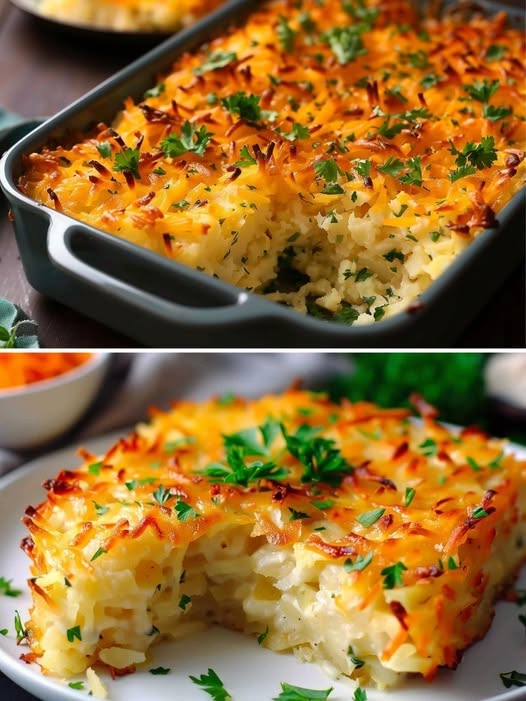
This Cheesy Potato & Onion Bake is undoubtedly one of those recipes that feel like a warm hug.
I made it for the first time after a buddy said that it was the type of food that everyone would return for more. She was entirely correct. Last weekend, I attempted it with my family, and before I knew it, the baking dish was nearly completely clean. The delicate, creamy potatoes underneath vanished after the crunchy, golden cheese on top. Even the person who typically says, “I’m just having a little,” returned for more..
Golden, bubbling, cheesy, and wonderfully comforting, this Cheesy Potato & Onion Bake is the kind of dish that makes an ordinary dinner feel special. Tender potatoes and sweet onions are baked until creamy inside, while the top becomes beautifully golden and crisp.
For an anti-inflammatory-inspired diet, I like emphasizing whole foods and adding ingredients such as extra-virgin olive oil, onions, garlic, herbs, and fresh parsley. These ingredients are commonly associated with Mediterranean-style eating patterns. This recipe isn’t a medical treatment for inflammation, but it can fit nicely into a balanced, whole-food-focused meal plan.
I made this style of potato bake recently for a family weekend dinner, and it disappeared much faster than I expected. The crispy cheese topping was the first thing everyone noticed—and the creamy potato layers kept people coming back for seconds.
Why You’ll Love This Recipe
- Crispy, golden cheese topping
- Soft and creamy potatoes underneath
- Sweet, caramelized onion flavor
- Easy comfort food for a family dinner
- Uses simple pantry ingredients
- Easy to make ahead for meal prep
- Adaptable for vegetarian and Mediterranean-style meals
- Great alongside vegetables, chicken, fish, or beans
Ingredients
For the Potato Bake
- 2 lb (900 g) potatoes, peeled and thinly sliced
- 1 large yellow onion, thinly sliced
- 2 cloves garlic, finely minced
- 1 tablespoon extra-virgin olive oil
- 1 tablespoon unsalted butter
- 1 cup (240 ml) milk
- ½ cup (120 ml) low-sodium vegetable broth
- 1 cup (100 g) shredded sharp cheddar cheese
- ½ cup (50 g) shredded mozzarella cheese
- ½ teaspoon dried thyme
- ½ teaspoon black pepper
- ¼ teaspoon salt, or to taste
- 2 tablespoons fresh parsley, chopped
- ¼ teaspoon paprika, optional
Optional Anti-Inflammatory-Inspired Additions
For a more Mediterranean-style version, consider adding:
- ½ teaspoon turmeric
- A pinch of freshly ground black pepper
- 1 tablespoon extra-virgin olive oil
- Fresh rosemary or thyme
- A handful of spinach
- Sliced mushrooms
- A small amount of crushed red pepper
These additions can increase the variety of plant foods and herbs in the dish without changing its comforting character.
How to Make Cheesy Potato & Onion Bake
1. Prepare the potatoes
Preheat your oven to 375°F (190°C).
Peel the potatoes and slice them thinly and evenly. A mandoline can make this easier, but a sharp knife works perfectly well.
Try to keep the slices similar in thickness so they cook evenly.
2. Sauté the onion and garlic
Heat the olive oil and butter in a skillet over medium heat.
Add the sliced onion and cook for about 5–7 minutes, stirring occasionally, until softened and lightly golden.
Add the minced garlic and cook for another 30 seconds.
Don’t rush this step. Letting the onions soften brings out their natural sweetness and gives the finished casserole much more flavor.
3. Make the creamy mixture
In a bowl, whisk together the milk, vegetable broth, thyme, black pepper, salt, and paprika if using.
For the turmeric variation, add the turmeric here as well.
4. Layer everything
Lightly grease a baking dish.
Arrange a layer of sliced potatoes across the bottom. Add some of the sautéed onions and a small handful of cheese.
Repeat the layers until all the potatoes and onions have been used.
Pour the milk and broth mixture evenly over everything.
Finish with the remaining cheddar and mozzarella.
5. Bake
Cover the dish loosely with aluminum foil and bake for approximately 40 minutes.
Remove the foil and continue baking for another 20–25 minutes, or until the potatoes are completely tender and the cheese is deeply golden and bubbling.
If you want an especially crispy top, switch on the broiler for the final 1–2 minutes—but watch it closely.
6. Rest and garnish
Let the casserole rest for 10–15 minutes before serving.
Scatter fresh parsley over the top and serve warm.
That little resting period makes a difference. The sauce thickens slightly, the layers settle, and you get those beautiful slices instead of a dish that falls apart immediately.
Serving Suggestions
This potato bake is rich and satisfying, so I like serving it alongside something fresh.
Try it with:
- Grilled salmon and a green salad
- Roasted chicken and steamed broccoli
- Baked cod with lemon
- Turkey or lean chicken
- Lentil salad
- Roasted Brussels sprouts
- Green beans with garlic
- A simple tomato and cucumber salad
- Sautéed spinach
- Mediterranean-style roasted vegetables
For a healthy dinner, pair a moderate portion of the potato bake with plenty of colorful vegetables and a protein source.
For a weekend brunch, serve smaller portions alongside scrambled eggs, fresh fruit, and a green salad.
Variations
1. Mediterranean Potato Bake
Replace half the cheddar with crumbled feta and add spinach, cherry tomatoes, oregano, and a drizzle of extra-virgin olive oil.
2. Garlic & Herb Version
Add another clove or two of garlic and use fresh rosemary, thyme, and parsley.
3. Spicy Cheesy Potato Bake
Add red pepper flakes or a little cayenne to the milk mixture.
4. Mushroom & Onion Bake
Sauté sliced mushrooms with the onions before layering them with the potatoes.
5. Sweet Potato Version
Replace some or all of the regular potatoes with sweet potatoes for a slightly sweeter flavor and a different texture.
6. Lighter Version
Use reduced-fat milk, reduce the amount of cheese, and increase the vegetables. You can also replace some of the potato with cauliflower.
7. Dairy-Free Version
Use unsweetened plant milk and your favorite dairy-free shredded cheese. Choose a product that melts well for the best result.
8. Vegan Version
Use olive oil instead of butter, unsweetened plant milk, vegetable broth, and vegan cheese.
Make-Ahead Instructions
This is an excellent make-ahead dinner recipe.
Assemble the casserole, cover it tightly, and refrigerate it for up to 24 hours before baking.
When you’re ready to cook, allow the dish to sit at room temperature briefly while the oven preheats, then bake until the potatoes are tender and the center is hot.
Because a chilled casserole can take longer to cook, check the potatoes with a fork before serving.
Storage
Store leftovers in an airtight container in the refrigerator for 3–4 days.
Reheat individual portions in the microwave for convenience, or use the oven or air fryer when you want to bring back some of that crispy texture.
For meal prep, portion the bake alongside vegetables and a protein for easy weekday lunches or dinners.
Nutrition Information
Approximate nutrition per serving, assuming 8 servings:
| Nutrient | Approximate Amount |
|---|---|
| Calories | 285 kcal |
| Protein | 11 g |
| Carbohydrates | 35 g |
| Fat | 12 g |
| Saturated Fat | 6 g |
| Fiber | 4 g |
| Sugar | 4 g |
| Sodium | 390 mg |
| Calcium | 250 mg |
Nutrition is an estimate and will vary depending on the potatoes, cheese, milk, portion size, and other ingredients used.
Is This an Anti-Inflammatory Recipe?
I prefer calling this anti-inflammatory-inspired rather than claiming that the casserole itself reduces inflammation.
An eating pattern that emphasizes vegetables, fruits, whole grains, legumes, nuts, seeds, fish, herbs, and healthy unsaturated fats—such as a Mediterranean-style diet—is generally a more useful way to think about nutrition than focusing on one particular “anti-inflammatory” food.
This recipe can fit into that style of eating when paired with plenty of vegetables and a nutritious protein source. Using extra-virgin olive oil, onions, garlic, fresh herbs, and colorful vegetables can also make the overall meal more plant-forward.
Frequently Asked Questions
Can I use russet potatoes?
Absolutely. Russet potatoes work well because they become soft and fluffy when baked. Yukon Gold potatoes are another excellent choice and give the casserole a naturally buttery texture.
Why are my potatoes still hard?
The slices may be too thick, or the casserole may need more cooking time. Slice the potatoes evenly and test the center with a fork before removing the dish from the oven.
Can I prepare this without cream?
Yes. This version uses milk and vegetable broth rather than heavy cream, keeping the sauce relatively light while still giving you a creamy result.
Can I add vegetables?
Definitely. Spinach, mushrooms, broccoli, zucchini, cauliflower, and bell peppers can all work. Just avoid adding too many watery vegetables without adjusting the cooking method.
Can I freeze potato bake?
You can, although potatoes can change texture after freezing and thawing. For the best texture, I recommend enjoying it fresh or refrigerating leftovers for several days.
What cheese melts best?
Cheddar gives you a stronger flavor, while mozzarella creates a stretchy, gooey topping. Using a combination of the two gives you the best of both.
Is this suitable for meal prep?
Yes. Divide it into individual portions and refrigerate them in airtight containers. Pair each serving with vegetables and a protein for a balanced meal.
Final Thoughts
There are recipes that impress because they’re complicated, and then there are recipes like this one that win everyone over simply because they taste like home.