ChatGPT said:
Anti-Inflammatory Braised Cabbage and Onion Soup
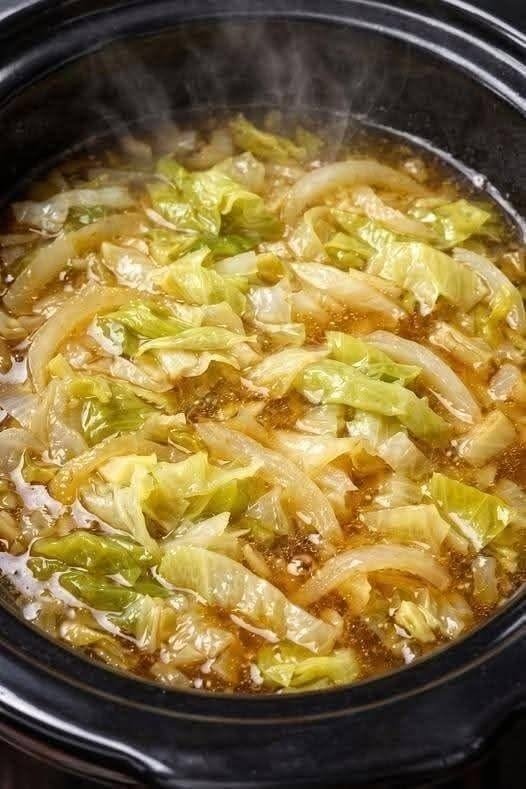
This cozy braised cabbage and onion soup is inspired by the dish in your photo: tender cabbage and sweet onions slowly cooked in a savory, lightly seasoned broth. It is inexpensive, naturally vegetable-forward, comforting, and easy to adapt for a healthy meal prep, vegetarian, vegan, or low-calorie eating plan.
One important note: no single soup can “cure” inflammation. The evidence is stronger for an overall eating pattern rich in vegetables, whole grains, legumes, nuts, seeds, healthy oils, and other minimally processed foods. Onions contain polyphenols, and vegetables provide fiber and other plant compounds that fit well into an anti-inflammatory eating pattern.
H
Harvard Health
+1
🥬 Recipe at a Glance
Prep time: 15 minutes
Cook time: 35–45 minutes
Total time: About 1 hour
Servings: 4–6
Cuisine: Comfort food / Asian-inspired
Diet: Vegetarian; easily vegan
Best for: Healthy dinner, meal prep, light lunch, vegetable soup
Ingredients
Main ingredients
1 large head green cabbage, about 2 lb, chopped
2 large yellow onions, thinly sliced
3 cloves garlic, minced
1 tablespoon extra-virgin olive oil
5 cups low-sodium vegetable broth
1 tablespoon low-sodium soy sauce or tamari
1 teaspoon grated fresh ginger
1 teaspoon rice vinegar or apple cider vinegar
½ teaspoon turmeric
½ teaspoon black pepper
½ teaspoon smoked paprika, optional
½ teaspoon sesame oil, optional
Salt, to taste
1–2 teaspoons toasted sesame seeds, for serving
2 green onions, sliced, for garnish
Optional ingredients
For a heartier high-protein soup, add one of these:
1½ cups cooked white beans
1 cup cooked lentils
8 oz cubed tofu
1½ cups shredded cooked chicken
1 cup shelled edamame
How to Make Braised Cabbage and Onion Soup
1. Prepare the vegetables
Remove the outer leaves and core from the cabbage. Chop it into bite-sized pieces.
Slice the onions fairly thinly so they become soft and sweet during cooking.
Mince the garlic and grate the ginger.
2. Sauté the onions
Heat the olive oil in a large heavy-bottomed pot or Dutch oven over medium heat.
Add the onions and cook for 7–10 minutes, stirring occasionally.
You want them soft, translucent, and lightly golden rather than deeply browned.
3. Add garlic and spices
Add the garlic, ginger, turmeric, black pepper, and smoked paprika.
Cook for about 30–60 seconds, just until fragrant.
4. Add the cabbage
Add the chopped cabbage a few handfuls at a time.
It may look like there is too much cabbage initially, but it will shrink considerably as it cooks.
Stir everything together.
5. Add broth
Pour in the vegetable broth.
Add the soy sauce or tamari.
Bring the mixture to a gentle boil.
6. Simmer
Reduce the heat to low, cover, and simmer for approximately 30–40 minutes.
For the texture shown in your photo, cook until the cabbage is very tender but still has some structure.
For a softer, almost stew-like consistency, cook another 10–15 minutes.
7. Finish the soup
Stir in the rice vinegar and optional sesame oil.
Taste and adjust the seasoning.
If needed, add a little more soy sauce, black pepper, or salt.
8. Garnish
Ladle into bowls and finish with:
Sliced green onions
Toasted sesame seeds
Fresh cilantro
A few drops of sesame oil
Freshly ground black pepper
Serve hot.
🌿 Why This Fits an Anti-Inflammatory Eating Pattern
Rather than thinking of one ingredient as an “anti-inflammatory cure,” it’s more useful to look at the overall meal.
This recipe emphasizes vegetables, onions, garlic, ginger, olive oil, and minimally processed ingredients. Harvard Health’s current guidance similarly emphasizes vegetables, fruits, whole grains, legumes, nuts, seeds, healthy oils, and other minimally processed foods as part of an anti-inflammatory eating pattern.
H
Harvard Health
+1
Onions are particularly interesting because they contain polyphenols such as quercetin. Research has identified antioxidant and other biological activities associated with onion flavonoids, although that does not mean eating onions alone treats inflammation.
P
PubMed
For an even more nutrient-dense version, add beans, lentils, leafy greens, or tofu. Increasing fiber and plant diversity is consistent with the broader dietary pattern recommended for healthy eating.
H
Harvard Health
+1
🍽️ Serving Suggestions
For a light lunch
Serve a large bowl with:
Whole-grain toast
Avocado
A side salad
For a high-protein dinner
Add:
Lentils
White beans
Tofu
Chicken
Salmon on the side
For a Mediterranean-inspired meal
Use extra-virgin olive oil, omit sesame oil, and serve with:
Chickpeas
Whole-grain bread
Fresh herbs
Lemon
For a low-carb meal
Keep the recipe as written and add tofu, chicken, or fish for protein.
For meal prep
Divide into 4–6 airtight containers and refrigerate. Reheat gently on the stovetop or in the microwave until steaming hot.
🔄 Healthy Variations
1. Ginger-Turmeric Cabbage Soup
Increase ginger to 1 tablespoon and turmeric to 1 teaspoon. Add a squeeze of lemon at the end.
2. Spicy Cabbage Soup
Add:
½–1 teaspoon red pepper flakes
1 teaspoon chili garlic sauce
Fresh sliced chili
3. Cabbage and Lentil Soup
Add 1½ cups cooked lentils or approximately ¾ cup dry lentils with additional broth and simmer until tender.
This turns the light vegetable soup into a much more satisfying high-fiber, plant-based meal.
4. Vegan Cabbage Soup
Use vegetable broth and tamari instead of chicken broth and regular soy sauce.
5. Chicken Cabbage Soup
Add 1½ cups shredded cooked chicken near the end of cooking.
6. Creamy Cabbage Soup
Blend approximately one-third of the finished soup and stir it back into the pot. This creates a creamy texture without needing heavy cream.
7. Mushroom Cabbage Soup
Add 8 oz sliced mushrooms with the onions for an extra savory, umami-rich version.
8. Korean-Inspired Version
Add:
1 teaspoon toasted sesame oil
Gochugaru or red pepper flakes
Mushrooms
Tofu
Green onions
💪 Approximate Nutrition
Nutrition will vary depending on the broth, oil, soy sauce, and serving size.
Per serving, assuming 6 servings and excluding optional protein additions:
Nutrient Approx. amount
Calories 130–160 kcal
Protein 4–5 g
Carbohydrates 20–24 g
Fiber 5–7 g
Fat 5–7 g
Saturated fat <1 g
Sodium ~400–700 mg*
*Sodium varies substantially according to the broth and soy sauce. Using low-sodium broth and reduced-sodium tamari/soy sauce can significantly reduce the total.
Adding beans, lentils, tofu, or chicken will increase protein and calories.
🥣 Frequently Asked Questions
Is cabbage soup good for an anti-inflammatory diet?
It can be a good component of an anti-inflammatory eating pattern because it is rich in vegetables and can be prepared with olive oil, herbs, spices, and other minimally processed foods. However, it should not be considered a medical treatment for inflammation. Overall dietary quality matters much more than any individual recipe.
H
Harvard Health
+1
Can I eat cabbage soup every day?
You can include it regularly if it fits your nutritional needs, but variety is preferable. Rotate different vegetables, legumes, whole grains, nuts, seeds, and protein sources throughout the week.
Is this a weight-loss soup?
It can work well as a low-calorie meal, but weight loss depends on your overall calorie intake, nutritional needs, activity, and other factors. Adding beans, lentils, tofu, chicken, or fish can make it more filling and nutritionally complete.
Is this recipe vegan?
Yes. Use vegetable broth and tamari or soy sauce. Check your packaged ingredients if strict vegan eating is important to you.
Is cabbage soup keto?
The recipe is relatively low in calories but isn’t necessarily ketogenic because cabbage and onions contain carbohydrates. For a lower-carb version, reduce the onions and add tofu or another low-carb protein.
Can I freeze cabbage soup?
Yes. Let the soup cool, transfer it to freezer-safe containers, and leave some space for expansion. Thaw overnight in the refrigerator and reheat thoroughly.
How do I make the soup taste better?
The biggest flavor improvements are properly sautéing the onions, using fresh garlic and ginger, choosing a flavorful broth, and finishing with an acidic ingredient such as rice vinegar or lemon juice.
Can I make this in a slow cooker?
Yes. Sautéing the onions first gives better flavor, but you can place all ingredients except vinegar and sesame oil into a slow cooker and cook on LOW for about 5–6 hours. Add the vinegar and sesame oil at the end.
💡 Tips for the Best Flavor
Don’t rush the onions. Ten minutes of gentle sautéing creates significantly more flavor than simply boiling raw onions.
Use fresh ginger. It gives the soup a brighter flavor than dried ginger.
Don’t over-salt early. Soy sauce and broth can both contain substantial sodium, so taste the finished soup before adding salt.
Finish with acid. A small amount of vinegar or lemon juice makes the cabbage taste fresher and balances the savory broth.
Add protein. If this is your main meal, beans, lentils, tofu, chicken, or fish can turn it from a light soup into a more complete dinner.
Final Thoughts
This Braised Cabbage and Onion Soup is a simple example of how healthy eating doesn’t have to mean complicated recipes. Tender cabbage, caramelized onions, garlic, ginger, turmeric, and a savory broth create a comforting bowl with relatively few ingredients.