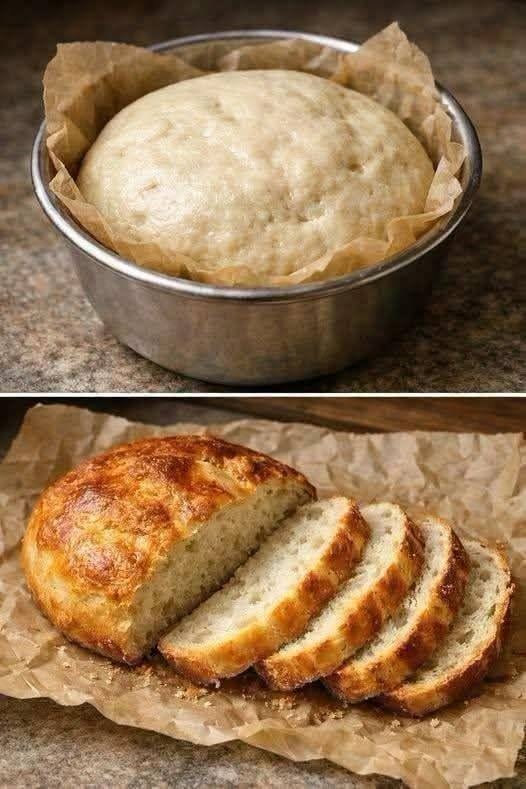
Certain recipes seem to be more than just food. Long after the final piece is gone, they become a part of your weekends, chats with your family, and those small moments you cherish. For me, one of those recipes is this No-Knead Dutch Oven Bread.
This type of bread first caught my attention after a friend suggested that I attempt a basic overnight dough. To be honest, I didn’t think anything that needed very little kneading could become a gorgeous bakery-style loaf. However, I tried it, and I soon realised why it’s so popular.
I baked this bread for my family last weekend. I covered the bowl and left it overnight because the dough came together in a matter of minutes. The following day, the kitchen…
No-Knead Dutch Oven Bread — Whole-Grain & Anti-Inflammatory Style
This easy no-knead bread recipe produces a rustic, crusty artisan loaf with a soft, chewy interior—without a stand mixer or extensive kneading. The dough is mixed in minutes and relies on a long fermentation to develop flavor and structure.
For the “anti-inflammatory” version, I recommend using whole-wheat flour, extra-virgin olive oil, flaxseed, walnuts, herbs, and seeds. These ingredients fit a Mediterranean-style eating pattern that emphasizes whole grains, nuts, seeds, olive oil, vegetables, and minimally processed foods.
Important: Bread itself should not be considered a treatment for inflammation. The evidence is stronger for an overall dietary pattern than for any individual food.
🍞 Recipe at a Glance
Prep time: 10–15 minutes
Rest/fermentation: 12–18 hours
Bake time: 40–50 minutes
Total: About 13–19 hours
Yield: 1 rustic loaf, about 8–10 servings
Difficulty: Easy
Method: Dutch oven bread / artisan bread
Ingredients
For the bread
- 2 cups (240 g) whole-wheat flour
- 1½ cups (180 g) bread flour or all-purpose flour
- 1¾ cups (415 ml) lukewarm water
- 1½ teaspoons fine sea salt
- ½ teaspoon instant yeast
- 1 tablespoon extra-virgin olive oil
- 1 tablespoon ground flaxseed
- 1 tablespoon pumpkin seeds or sunflower seeds
- 1 teaspoon dried rosemary or thyme
- 1 teaspoon honey or maple syrup, optional
Optional anti-inflammatory-style additions
Choose 1–3:
- 1 tablespoon chopped walnuts
- 1 tablespoon chia seeds
- 1 tablespoon sesame seeds
- ½ teaspoon ground turmeric
- ½ teaspoon dried oregano
- 1 tablespoon finely chopped fresh rosemary
- 1 tablespoon rolled oats for the crust
The goal isn’t to turn the loaf into a “miracle food”; these additions simply make it more nutrient-dense and compatible with a Mediterranean-style eating pattern. Whole grains, nuts, seeds, olive oil, and herbs are commonly emphasized in anti-inflammatory dietary patterns.
How to Make No-Knead Dutch Oven Bread
1. Mix the dough
Add the whole-wheat flour, bread flour, salt, yeast, flaxseed, seeds and herbs to a large mixing bowl.
Stir to combine.
Pour in the lukewarm water and olive oil. Add honey or maple syrup if using.
Mix with a wooden spoon or spatula until you have a shaggy, sticky dough.
Don’t knead it.
The dough should look rough and somewhat wet.
2. Cover and ferment
Cover the bowl tightly with plastic wrap, a reusable cover, or a clean kitchen towel.
Leave it at room temperature for approximately 12–18 hours.
The dough should become:
- Puffy
- Bubbly
- Soft
- Approximately doubled in volume
A longer fermentation generally gives the bread a deeper, more complex flavor.
3. Shape the loaf
Lightly flour your work surface.
Turn the dough onto the surface.
Gently fold the edges toward the center several times, then shape it into a rough round loaf.
Don’t aggressively knead or press the air out.
Place the dough on parchment paper and let it rest for another 30–60 minutes.
4. Preheat the Dutch oven
Place a Dutch oven with its lid inside your oven.
Preheat to:
450°F (230°C)
Allow the Dutch oven to heat for approximately 30 minutes.
Be extremely careful—the pot and lid will become very hot.
5. Transfer the dough
Carefully remove the Dutch oven.
Using the parchment paper as a sling, lower the dough into the hot pot.
Optional: score the top with a sharp knife or bread lame.
This allows the loaf to expand during baking.
6. Bake
Cover with the lid.
Bake at 450°F (230°C) for 30 minutes.
Remove the lid and continue baking for approximately 10–20 minutes, until the crust is deeply golden brown.
For an especially crisp crust, allow it to become a rich brown rather than removing it while it’s still pale.
7. Cool before slicing
Transfer the bread to a wire rack.
Allow it to cool for at least 45–60 minutes before slicing.
This is important because the interior continues setting as the loaf cools.
What Makes This Version More Nutrient-Dense?
Traditional white no-knead bread can be delicious, but replacing some refined flour with whole-wheat flour increases the amount of dietary fiber and micronutrients.
The flaxseed, seeds and walnuts also contribute healthy fats and plant nutrients, while extra-virgin olive oil fits the healthy-fat profile of Mediterranean-style eating. Whole grains, nuts, seeds and olive oil are among the foods commonly emphasized in anti-inflammatory dietary patterns.
That said, “anti-inflammatory bread” is a descriptive nutrition approach, not a medical claim. No single bread can cure chronic inflammation.
Serving Suggestions
🥑 Healthy Breakfast
Toast a slice and top with:
- Mashed avocado
- Extra-virgin olive oil
- Black pepper
- Tomato
- Pumpkin or chia seeds
🥚 High-Protein Breakfast
Serve toasted bread with:
- Eggs
- Avocado
- Spinach
- Tomatoes
- Greek yogurt on the side
🥗 Mediterranean Lunch
Pair a slice with:
- Hummus
- Chickpeas
- Cucumber
- Tomatoes
- Leafy greens
- Olives
- Olive-oil-and-lemon dressing
🐟 Heart-Healthy Dinner
Serve with grilled salmon or sardines and a large vegetable salad.
Fatty fish, whole grains, nuts, seeds and olive oil are frequently included in Mediterranean-style dietary patterns associated with better cardiovascular and metabolic health.
🍓 Healthy Snack
Toast with:
- Natural almond butter
- Chia seeds
- Fresh berries
- Cinnamon
Recipe Variations
1. 100% Whole-Wheat Bread
Replace the bread flour with additional whole-wheat flour.
Note: The loaf will be denser and less airy, so you may need slightly more water.
2. Garlic & Rosemary Bread
Add:
- 2 minced garlic cloves
- 1 tablespoon fresh rosemary
- 1 teaspoon olive oil
Excellent alongside soups and roasted vegetables.
3. Seeded Artisan Bread
Add:
- 1 tablespoon flaxseed
- 1 tablespoon chia
- 1 tablespoon pumpkin seeds
- 1 tablespoon sunflower seeds
This makes a hearty, nutty loaf.
4. Turmeric & Black Pepper Bread
Add:
- ½ teaspoon turmeric
- ¼ teaspoon freshly ground black pepper
- ½ teaspoon rosemary
The flavor is subtle, but it creates a beautiful golden color.
5. Walnut Bread
Fold in approximately ¼ cup chopped walnuts during shaping.
Walnuts are a source of unsaturated fats and plant omega-3 fatty acid (ALA).
6. Gluten-Free Version
A conventional no-knead wheat recipe cannot simply be substituted 1:1 with gluten-free flour because gluten provides the structure.
Use a gluten-free bread flour blend specifically formulated for yeast bread and follow the blend manufacturer’s hydration recommendations.
Approximate Nutrition
Per serving, assuming 10 servings and the recipe above:
| Nutrient | Approximate amount |
|---|---|
| Calories | 175–200 kcal |
| Carbohydrates | 32–35 g |
| Protein | 5–7 g |
| Fat | 3–5 g |
| Fiber | 4–6 g |
| Sodium | 300–400 mg |
These numbers are estimates and can vary substantially depending on the flour brand, seeds, amount of salt and serving size.
Frequently Asked Questions
Is no-knead bread healthier than regular bread?
Not automatically. Its nutritional value depends largely on the ingredients. Using whole grains, seeds and other minimally processed ingredients can make it more nutrient-dense than a loaf made primarily from refined flour.
Can I make this bread without a Dutch oven?
Yes. Bake it on a preheated baking sheet or pizza stone and place a heatproof pan containing boiling water in the oven during the first portion of baking to create steam.
The crust may not be quite as thick and crisp as Dutch oven bread.
Why is my bread dense?
Common causes include:
- Dough didn’t ferment long enough
- Yeast was inactive
- Too much flour was added
- Dough was heavily handled
- Whole-wheat flour absorbed more water than expected
- The dough was baked before becoming sufficiently airy
Can I let the dough ferment longer?
Yes, but temperature matters. In a warm kitchen, fermentation happens faster.
If you want a slower fermentation, refrigerate the dough after it has begun fermenting and allow additional time for it to develop.
Can I use sourdough starter?
Absolutely. Replace the commercial yeast with an active sourdough starter and adjust the flour and water accordingly. Fermentation time will be considerably longer and depends on starter strength and room temperature.
Is this bread suitable for weight loss?
It can fit into a weight-management diet, but portion size and the overall diet matter more than one recipe. Whole grains and fiber can contribute to satiety, but bread is still a calorie-containing food.
Is this bread good for an anti-inflammatory diet?
This particular version is designed to fit better into an anti-inflammatory-style eating pattern because it emphasizes whole wheat, seeds, nuts, olive oil and herbs. However, it shouldn’t be marketed as a treatment for inflammation. Current guidance emphasizes the overall dietary pattern—particularly vegetables, fruits, legumes, whole grains, nuts, seeds, fish and healthy oils—rather than a single food.
Can I make it dairy-free?
Yes. The recipe contains no milk, butter or cheese.
Is it vegan?
Yes, if you use maple syrup instead of honey.
How should I store homemade bread?
Keep it in a breathable bread bag or wrapped in a clean towel at room temperature for approximately 2–3 days.
For longer storage, slice it and freeze it in an airtight freezer bag. Toast slices directly from frozen.
SEO-Friendly Recipe Keywords
For a food blog, Pinterest description, YouTube video, or recipe post, relevant search terms include:
No-knead bread recipe, Dutch oven bread, artisan bread recipe, easy homemade bread, healthy bread recipe, whole wheat bread, rustic bread, crusty bread recipe, easy yeast bread, Mediterranean diet recipes, anti-inflammatory diet recipes, whole grain recipes, high fiber bread, healthy breakfast recipes, homemade bread recipe, bread without kneading, overnight bread recipe, easy Dutch oven recipes, healthy homemade bread.
A good content strategy is to use these naturally rather than stuffing the article with repeated keywords.
Final Thoughts
This No-Knead Dutch Oven Bread is one of the easiest ways to make bakery-style bread at home. The long fermentation does most of the work, while the Dutch oven creates the characteristic crisp, golden crust and soft, chewy center.