🌺 Ingredients
For approximately 500 ml / 2 cups
1–2 tablespoons dried hibiscus calyces/flowers
500 ml (about 2 cups) drinking water
½ lemon, freshly squeezed — optional
½–1 teaspoon honey — optional
2–3 thin slices of fresh ginger — optional
2–4 fresh mint leaves — optional
Ice cubes — optional, if making iced hibiscus tea
Choosing the hibiscus
Use food-grade dried hibiscus/roselle, preferably sold specifically for tea or culinary use. The dried material is usually deep red or burgundy and has a strongly sour, fruity flavor.
Don’t use an ornamental hibiscus flower from a garden or florist unless you know that it is specifically suitable for food use.
🍵 Method 1: Traditional Hot Hibiscus Tea
This is the easiest method.
Step 1 — Measure the water
Pour 500 ml (2 cups) of water into a small saucepan.
Use clean drinking water. If your tap water has a strong taste, filtered water can make the finished tea taste better.
Step 2 — Heat the water
Bring the water to a boil.
Once it reaches a full boil, reduce the heat slightly.
Step 3 — Add the hibiscus
Add 1–2 tablespoons of dried hibiscus to the hot water.
If you want a milder tea, start with 1 tablespoon.
If you prefer a strong, dark-red, sour tea, use approximately 2 tablespoons.
Step 4 — Add ginger, if desired
If you’re using ginger, add 2–3 thin slices of fresh ginger at this stage.
Ginger isn’t required for hibiscus tea; it’s simply an optional flavoring.
Step 5 — Simmer
Allow the mixture to gently simmer for approximately 5–10 minutes.
You don’t need to boil it aggressively.
The water should gradually become a beautiful deep ruby-red or burgundy color.
Step 6 — Turn off the heat
After 5–10 minutes, turn off the stove.
Cover the saucepan with a lid.
Allow the tea to stand for another 5–10 minutes.
This extra steeping time gives the water a stronger flavor and color.
Step 7 — Strain
Place a fine strainer over a jug or heat-resistant container.
Pour the tea through the strainer.
Discard the used hibiscus flowers.
Step 8 — Add lemon
Allow the tea to cool for a few minutes.
Then add approximately ½ lemon, depending on your taste.
Hibiscus is naturally quite sour, so you may find that you don’t need much lemon.
Step 9 — Sweeten if necessary
If the tea is too sour, add ½–1 teaspoon of honey.
You can also drink it completely unsweetened.
If your goal is to keep the drink low in calories, avoid adding large amounts of sugar or honey.
Step 10 — Serve
Drink it warm like ordinary tea, or allow it to cool and serve it over ice.
🧊 Method 2: Cold Hibiscus Tea
This is particularly good during hot weather.
Ingredients
2 tablespoons dried hibiscus
750 ml–1 liter water
½ lemon
Mint leaves
Optional small amount of honey
Preparation
Bring 750 ml–1 liter of water to a boil.
Add the hibiscus.
Simmer for approximately 5–10 minutes.
Turn off the heat.
Cover and steep for another 10 minutes.
Strain the tea.
Allow it to cool to room temperature.
Add lemon.
Add a small amount of honey if desired.
Refrigerate.
Serve over ice with mint.
You can prepare a larger batch and keep it refrigerated, but for best flavor, make a fresh batch regularly rather than keeping it for many days.
🍋 My Recommended 10-Day Version
If you’re specifically looking for a 10-day hibiscus-tea routine, I’d keep it simple rather than making an extremely concentrated preparation.
Days 1–3
Prepare:
1 tablespoon dried hibiscus
500 ml water
Drink approximately 1 cup during the day.
This allows you to see how your body responds to the tea.
Days 4–7
If you tolerate it well, you can continue with:
1–2 tablespoons dried hibiscus
500 ml water
Drink 1–2 cups throughout the day.
You don’t need to drink the entire amount at once.
Days 8–10
Continue the same preparation:
1–2 tablespoons dried hibiscus
500 ml water
Optional lemon
Minimal or no added sugar
Drink 1–2 cups per day.
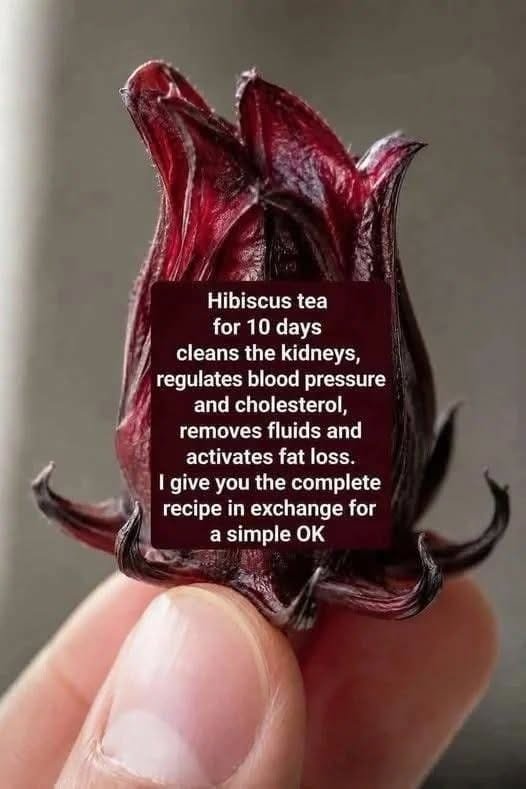
There is no scientifically established requirement to stop exactly after 10 days. The “10-day cleanse” in the image is a social-media claim rather than a clinically established hibiscus protocol.
🕐 What Time Should You Drink It?
There isn’t a special scientifically proven time when hibiscus “burns fat” or “cleans the kidneys.”
A practical schedule would be:
Morning
1 cup after breakfast
This can be a convenient replacement for a sugary drink.
Afternoon
If you want a second cup, have it during the afternoon.
Evening
If hibiscus makes you urinate more frequently, avoid drinking a large quantity immediately before bedtime.
The idea that drinking it at a particular time causes greater fat loss isn’t supported by good evidence.
🌿 Optional “Flavor Recipe”
If you want something more enjoyable than plain hibiscus, try this combination:
Ingredients
1½ tablespoons dried hibiscus
500 ml water
2 slices fresh ginger
½ lemon
2 mint leaves
½ teaspoon honey
Directions
Boil 500 ml water.
Add the hibiscus and ginger.
Simmer for 7 minutes.
Turn off the heat.
Cover for 8 minutes.
Strain.
Allow it to cool slightly.
Add lemon.
Add mint.
Add ½ teaspoon honey if necessary.
Drink warm or refrigerate and serve cold.
This produces a tart, fruity, slightly spicy drink.
🫖 Can You Make It Stronger?
You can, but stronger isn’t necessarily better.
Some clinical research has used relatively substantial quantities of hibiscus, but the preparations and treatment durations varied considerably between studies. There isn’t an established “strongest” or “best” home recipe for a 10-day detox.
For an ordinary beverage, I would not recommend continuously increasing the amount simply because you want faster weight loss or detoxification.
More hibiscus doesn’t mean more fat burning.
💧 Does Hibiscus “Clean the Kidneys”?
This is one of the claims in the image that needs clarification.
Your kidneys already filter waste products and regulate fluid and electrolytes. Drinking hibiscus tea doesn’t literally wash toxins out of your kidneys.
Hibiscus has been described as having a diuretic effect, meaning it may increase urine production in some circumstances, but increased urination isn’t the same thing as “kidney cleansing.”
So don’t use hibiscus tea as a substitute for medical treatment if you have kidney disease, kidney stones, abnormal kidney tests, or another kidney condition.
❤️ What About Blood Pressure?
This is the claim in the image that has some scientific support.
Several randomized trials and meta-analyses have found that Hibiscus sabdariffa consumption can produce a modest reduction in blood pressure, particularly in people with elevated blood pressure. One meta-analysis of 13 randomized trials involving 1,205 participants found reductions in both systolic and diastolic blood pressure compared with placebo.
Another systematic review found a significant reduction in systolic blood pressure, although the researchers emphasized that more research is needed to establish the optimal dose and duration.
However, this doesn’t mean hibiscus replaces blood-pressure medication. The U.S. National Center for Complementary and Integrative Health notes that the evidence is limited and that the effects of dietary supplements such as roselle are small compared with medications used to treat hypertension.
🩸 What About Cholesterol?
The evidence is more mixed.
Some research has reported improvements in certain lipid measurements, while other trials haven’t found significant changes in total cholesterol, triglycerides, or HDL cholesterol. A systematic review found some evidence for a reduction in LDL cholesterol, but the overall evidence doesn’t justify treating hibiscus as a cholesterol-lowering medicine.
Therefore, if your cholesterol is high, use hibiscus tea as a beverage if you enjoy it, but don’t replace prescribed treatment or a medically recommended diet with it.
⚖️ What About Weight Loss?
This is another important distinction.
Hibiscus tea is naturally very low in calories when you drink it without sugar. Therefore, replacing soda, sweet tea, or other high-calorie drinks with unsweetened hibiscus tea can indirectly help a weight-management plan.
But that is different from saying hibiscus tea “activates fat loss.”
There isn’t convincing evidence that drinking this particular 10-day recipe causes significant body-fat loss.
If your goal is weight loss, the most useful combination is:
unsweetened hibiscus tea instead of sugary beverages
adequate protein
vegetables and fruit
high-fiber foods
sensible portions
regular physical activity
adequate sleep
an appropriate calorie deficit if weight loss is medically appropriate
⚠️ Who Should Be Careful?
Hibiscus may lower blood pressure. Therefore, people who already have low blood pressure or take blood-pressure-lowering medication should be cautious.
If you take regular medication, especially medication for blood pressure or other chronic conditions, discuss regular hibiscus consumption with your doctor or pharmacist.
Also seek professional advice if you’re:
pregnant or breastfeeding
being treated for kidney or liver disease
taking multiple medications
prone to dizziness or low blood pressure
using hibiscus as an alternative to prescribed treatment
If you experience significant dizziness, fainting, unusual weakness, or another concerning symptom after drinking it, stop and seek medical advice.
📋 Simple Daily Recipe Card
For one day:
Ingredients
1–2 tbsp dried hibiscus
500 ml water
½ lemon
½ tsp honey, optional
2 slices ginger, optional
Method
1. Boil 500 ml water.
2. Add hibiscus and ginger.
3. Simmer 5–10 minutes.
4. Turn off heat.
5. Cover for 5–10 minutes.
6. Strain thoroughly.
7. Add lemon.
8. Add a small amount of honey if desired.
9. Drink 1 cup and refrigerate the remainder.
10. Use the same basic recipe for up to 10 days if you tolerate it well.