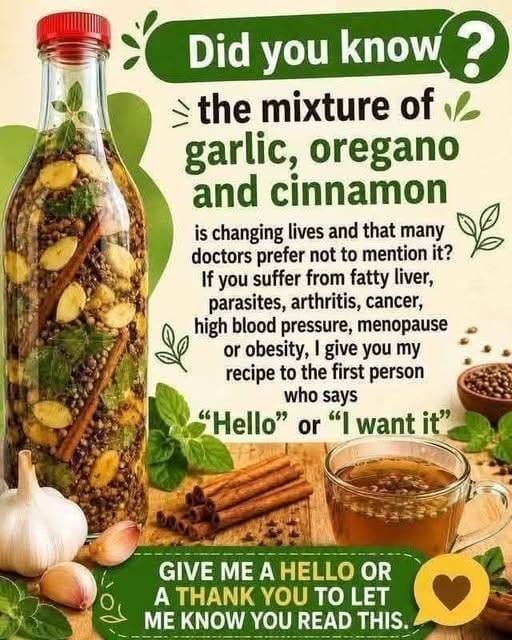
This garlic, oregano, and cinnamon blend was undoubtedly one of those recipes that, when you first hear about it, seem a little strange.
After discussing basic DIY herbal cocktails, a friend suggested it to me. I wasn’t entirely persuaded at first that cinnamon, garlic, and oregano belonged in the same cup. But I was captivated by curiosity.
I therefore made a modest quantity for my family last weekend.
The warm scent of oregano and cinnamon rapidly permeated the kitchen, along with the distinct savoury sense of garlic. Although it wasn’t the most attractive drink I had ever created, the flavour caught me off guard when I added a little honey and a squeeze of lemon..
Garlic, Oregano & Cinnamon Anti-Inflammatory Infusion
This recipe is inspired by the mixture shown in your image. It can be enjoyed as a warming herbal drink, but it should not be presented as a treatment or cure for fatty liver, parasites, arthritis, cancer, high blood pressure, menopause, or obesity. Current evidence does not establish this combination as a treatment for those conditions. NCCIH notes that evidence for cinnamon for specific health conditions is unclear, while garlic may have modest effects on blood pressure and blood sugar in some studies.
Ingredients
Makes about 4 servings
- 4 garlic cloves, lightly crushed
- 2 cinnamon sticks, preferably Ceylon cinnamon
- 1 tablespoon dried oregano or 2 tablespoons fresh oregano
- 4 cups (1 liter) water
- 1–2 teaspoons fresh lemon juice, optional
- 1 teaspoon honey, optional
- 2–3 thin slices fresh ginger, optional
- Pinch of black pepper, optional
Instructions
- Add the water and cinnamon sticks to a saucepan.
- Bring to a gentle boil, then reduce the heat and simmer for 8–10 minutes.
- Add the crushed garlic and oregano.
- Simmer gently for another 3–5 minutes.
- Remove from the heat and allow it to steep for about 5 minutes.
- Strain into cups.
- Add lemon juice and a small amount of honey if desired.
- Serve warm.
Tip: Avoid aggressively boiling the garlic for a long time. The drink will have a strong, savory flavor, so lemon and a little honey can make it considerably more pleasant.
Serving Suggestions
A practical serving is ½–1 cup at a time, preferably with or after food if garlic bothers your stomach.
You can enjoy it:
- Warm as an herbal tea
- With lemon and ginger for a brighter flavor
- After a meal instead of a sugary beverage
- Chilled over ice during warm weather
- With a small amount of honey for sweetness
This is best viewed as a food-based wellness beverage, not a detox drink or substitute for medical treatment.
Variations
1. Ginger-Garlic Wellness Tea
Add 3–4 slices of fresh ginger for a stronger spicy flavor.
2. Lemon Cinnamon Infusion
Increase the lemon juice and omit oregano for a milder, more tea-like drink.
3. Honey Herbal Tea
Add 1 teaspoon honey after the drink has cooled slightly.
4. Mediterranean Version
Use fresh oregano, garlic and Ceylon cinnamon, with lemon added at the end.
5. Stronger Garlic Version
Use 5 cloves instead of 4, but expect a much stronger flavor and potentially more digestive discomfort.
Nutrition
Because the garlic, oregano and cinnamon are steeped and then strained, this beverage contains relatively few calories and macronutrients, especially if you don’t add honey.
Approximate nutrition per 1-cup serving will depend heavily on how much of the ingredients are actually consumed:
| Nutrient | Approximate amount |
|---|---|
| Calories | ~5–15 kcal |
| Carbohydrates | ~1–3 g |
| Protein | <1 g |
| Fat | <1 g |
| Fiber | Very little after straining |
| Added sugar | 0 g without honey |
The nutritional value is therefore quite different from eating the whole garlic and oregano. If honey is added, its calories and carbohydrates should be included.
Is It Really Anti-Inflammatory?
Garlic, oregano and cinnamon contain biologically active compounds, which is one reason they’re often discussed in anti-inflammatory diets and natural wellness recipes. However, laboratory or preliminary findings don’t automatically mean that drinking this particular mixture will reduce inflammation in humans.
NCCIH specifically notes that evidence for many nutritional approaches marketed for inflammatory conditions remains insufficient.
So a responsible claim would be:
“A flavorful spice-and-herb drink that can fit into an overall healthy, anti-inflammatory eating pattern.”
Rather than:
“This drink cures inflammation.”
Important Safety Information
Garlic is generally safe in normal food quantities, but oral garlic can cause heartburn, abdominal discomfort, gas, nausea and other digestive symptoms. Garlic supplements can also increase bleeding risk and may interact with anticoagulants such as warfarin or with aspirin.
Cinnamon is generally considered safe in normal culinary quantities. However, cassia cinnamon contains varying amounts of coumarin, and prolonged/high consumption can be a concern particularly for people with liver disease. Ceylon cinnamon contains much less coumarin.
If you’re pregnant, breastfeeding, preparing for surgery, have liver disease, or take prescription medications—particularly blood thinners or diabetes medication—check with your healthcare professional before using concentrated herbal preparations regularly. Herbal products can interact with medications.
Frequently Asked Questions
Can I drink this every day?
An occasional culinary-strength cup is different from taking concentrated herbal supplements. If you intend to consume it daily for weeks or months, especially in large quantities, discuss it with your healthcare professional.
Can it reduce belly fat or cause weight loss?
There is no good evidence that this drink itself causes meaningful fat loss. Sustainable weight management depends primarily on overall calorie intake, diet quality, physical activity, sleep and other lifestyle factors.
Is it a liver detox?
No. The body already has sophisticated systems for processing and eliminating substances. The mixture shouldn’t be used as a treatment for fatty liver or liver disease.
Can it replace blood-pressure medication?
No. Although garlic supplements have shown a small potential blood-pressure effect in some research, that does not make this beverage a replacement for prescribed treatment.
Can I use it for arthritis?
It may be a pleasant addition to a healthy diet, but evidence isn’t sufficient to recommend this mixture as an arthritis treatment.
Which cinnamon is better?
For frequent culinary use, Ceylon cinnamon is an attractive choice because it contains much less coumarin than typical cassia cinnamon.
Related Questions
- What is the best anti-inflammatory diet?
- What foods are naturally high in antioxidants?
- Is garlic good for heart health?
- What is the difference between Ceylon and cassia cinnamon?
- Can cinnamon affect blood sugar?
- What are the benefits and risks of oregano?
- How can I make a healthy herbal tea without added sugar?
- What foods support healthy blood pressure?
- What lifestyle changes support healthy liver function?
- What are evidence-based ways to manage inflammation?
Final Thoughts
Garlic, oregano and cinnamon make an interesting low-calorie herbal infusion with a bold flavor and a place in a balanced diet. The most useful way to think about it is as a wholesome beverage—not a miracle cure, parasite cleanse, cancer remedy, weight-loss supplement, or replacement for medical care.