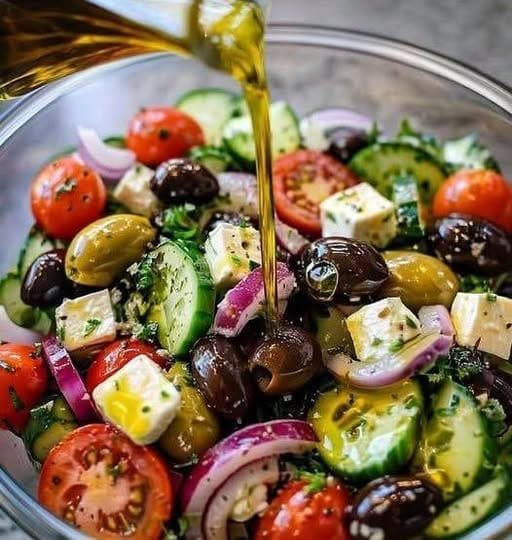
There are some dishes that instantly brighten your day, and this Anti-Inflammatory Classic Greek Salad has become one of those recipes in my kitchen. My sister kept telling me how much she like easy Mediterranean dinners, so last weekend I prepared it for a family lunch. Since it was “just a salad,” I didn’t anticipate anything special, but by the time everyone had finished eating, the bowl was empty.
Even my family members who generally seek for heavier dishes couldn’t stop going back for seconds. The fresh flavour of the homemade lemon and olive oil dressing complemented the crisp cucumbers, juicy tomatoes, creamy feta, and briny olives. It served as a reminder that eating healthily doesn’t have to be dull or difficult.
Anti-Inflammatory Classic Greek Salad Recipe
Anti-Inflammatory Classic Greek Salad
Fresh, colorful, and packed with nutrient-dense ingredients, this Anti-Inflammatory Classic Greek Salad is a Mediterranean-inspired recipe that supports overall wellness while delivering incredible flavor. Loaded with antioxidant-rich vegetables, heart-healthy extra virgin olive oil, anti-inflammatory herbs, and protein-rich feta cheese, this healthy Greek salad is perfect for lunch, dinner, or meal prep. It’s naturally gluten-free, low in carbohydrates, and ideal for anyone following a Mediterranean diet.
Prep Time: 15 minutes
Cook Time: 0 minutes
Total Time: 15 minutes
Servings: 4
Calories: Approximately 280 per serving
Ingredients
Salad
- 2 large cucumbers, sliced
- 2 cups cherry tomatoes, halved
- 1 medium red onion, thinly sliced
- 1 cup Kalamata olives
- 6 oz (170 g) feta cheese, cubed
- ¼ cup fresh parsley, chopped
- 2 tablespoons fresh oregano (or 2 teaspoons dried oregano)
Anti-Inflammatory Dressing
- ¼ cup extra virgin olive oil
- 2 tablespoons fresh lemon juice
- 1 tablespoon red wine vinegar
- 1 teaspoon Dijon mustard
- 1 garlic clove, minced
- ½ teaspoon sea salt
- ¼ teaspoon black pepper
- ½ teaspoon dried oregano
Instructions
Step 1: Prepare the Vegetables
Wash and slice the cucumbers, halve the cherry tomatoes, and thinly slice the red onion. Place them into a large serving bowl.
Step 2: Add the Remaining Ingredients
Add the Kalamata olives, cubed feta cheese, parsley, and oregano.
Step 3: Make the Dressing
In a small bowl or jar, whisk together olive oil, lemon juice, red wine vinegar, Dijon mustard, garlic, oregano, salt, and black pepper until well combined.
Step 4: Toss the Salad
Pour the dressing over the salad and gently toss until every ingredient is evenly coated.
Step 5: Chill (Optional)
For the best flavor, refrigerate for 15–20 minutes before serving.
Serve fresh and enjoy.
Why This Salad Is Anti-Inflammatory
Every ingredient contributes important nutrients that may support a healthy inflammatory response:
- Extra virgin olive oil provides healthy monounsaturated fats and polyphenols.
- Tomatoes are rich in lycopene, a powerful antioxidant.
- Cucumbers offer hydration and vitamin K.
- Red onions contain quercetin, a natural antioxidant.
- Parsley and oregano are rich in plant compounds with antioxidant properties.
- Lemon juice provides vitamin C.
- Olives contain healthy fats and antioxidant compounds.
Serving Suggestions
Serve this healthy Greek salad with:
- Grilled salmon
- Lemon herb chicken
- Grilled shrimp
- Turkey meatballs
- Whole-grain pita bread
- Quinoa
- Brown rice
- Roasted vegetables
- Chickpeas for a vegetarian protein boost
Delicious Variations
Mediterranean Power Bowl
Serve over quinoa or farro for a filling grain bowl.
High-Protein Greek Salad
Add grilled chicken breast, salmon, tuna, or chickpeas.
Vegan Version
Replace feta with dairy-free feta or avocado.
Low-Carb Keto Greek Salad
Use extra feta and olives while skipping grains.
Spicy Version
Add sliced jalapeños or crushed red pepper flakes.
Superfood Upgrade
Mix in spinach, kale, or arugula.
Omega-3 Boost
Top with walnuts, chia seeds, or hemp hearts.
Storage Tips
- Store leftovers in an airtight container for up to 2 days.
- Keep the dressing separate if making ahead.
- Add feta just before serving for the freshest texture.
Nutrition (Per Serving)
Approximate values:
- Calories: 280
- Protein: 8 g
- Carbohydrates: 12 g
- Fiber: 4 g
- Sugar: 6 g
- Fat: 23 g
- Saturated Fat: 6 g
- Cholesterol: 25 mg
- Sodium: 650 mg
- Potassium: 450 mg
- Vitamin C: 35% Daily Value
- Vitamin A: 18% Daily Value
- Calcium: 20% Daily Value
- Iron: 8% Daily Value
Frequently Asked Questions
Is Greek salad good for inflammation?
Yes. A traditional Greek salad contains vegetables, extra virgin olive oil, herbs, and olives, which are staples of the Mediterranean diet and provide nutrients and antioxidants that support overall health.
Can I make this salad ahead of time?
Yes. Prepare the vegetables and dressing separately, then combine just before serving.
What protein goes best with Greek salad?
Grilled chicken, salmon, shrimp, tuna, turkey, and chickpeas all pair wonderfully.
Is Greek salad keto-friendly?
Yes. This recipe is naturally low in carbohydrates and suitable for many low-carb and ketogenic eating plans.
Can I use bottled dressing?
Homemade dressing is recommended because it contains fresh ingredients and avoids many of the added sugars and preservatives found in some bottled dressings.
How long does Greek salad last?
It tastes best within 24–48 hours when refrigerated in an airtight container.
Can I add avocado?
Absolutely. Avocado adds creaminess, fiber, and heart-healthy fats.
Recipe Tips
- Use high-quality extra virgin olive oil for the best flavor.
- Fresh lemon juice makes a noticeable difference.
- Choose ripe cherry tomatoes for maximum sweetness.
- Slice onions thinly to reduce their sharpness.
- Allow the salad to rest for 15 minutes before serving to enhance the flavors.
Final Thoughts
This Anti-Inflammatory Classic Greek Salad is a simple, vibrant recipe that combines fresh vegetables, healthy fats, and Mediterranean flavors into a satisfying meal. It’s an excellent choice for meal prep, healthy lunches, light dinners, or as a side dish for grilled proteins. With wholesome ingredients, quick preparation, and versatile serving options, this salad fits seamlessly into a balanced lifestyle focused on nutritious eating. Whether you’re following a Mediterranean, low-carb, or gluten-free diet, this refreshing dish delivers both flavor and nourishment in every bite.