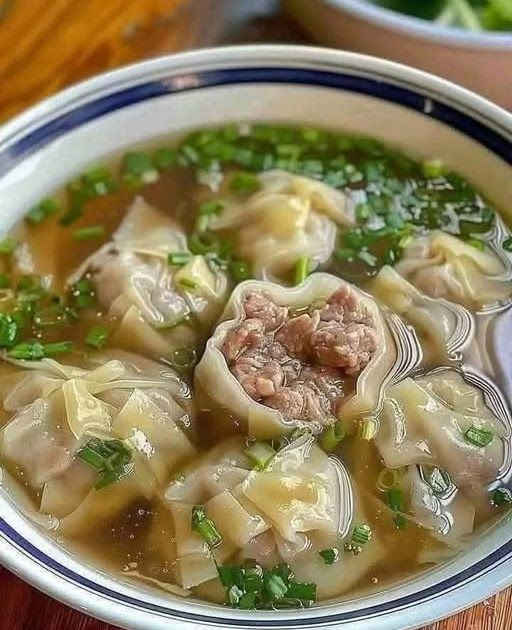
This Ginger-Garlic Wonton Soup is undoubtedly one of those dishes that are like a warm embrace in a bowl.
On a cold weekend, a buddy suggested preparing homemade wonton soup, which is how I got the concept for this soup. To be honest, I thought folding wontons would be a bit finicky, but once I got going, I discovered that it was actually quite calming. Cooking seems less like a duty and more like a time to settle down as you sit at the kitchen counter, fill each small wrapper, and watch a pot of fragrant broth come together.,,
Ginger-Garlic Wonton Soup — Anti-Inflammatory Recipe
This Ginger-Garlic Wonton Soup is a comforting Asian-inspired soup made with tender pork or chicken wontons, fresh ginger, garlic, scallions, leafy greens, and a flavorful broth. It’s designed around ingredients commonly featured in an anti-inflammatory diet, including ginger, garlic, vegetables, and herbs, while keeping added sugar and highly processed ingredients low.
The result is a cozy, protein-rich meal that works beautifully for healthy eating, meal prep, immune-supportive nutrition, gut-friendly meals, and balanced weeknight dinners.
🍲 Recipe at a Glance
Prep time: 25 minutes
Cook time: 15 minutes
Total time: 40 minutes
Servings: 4
Cuisine: Asian-inspired
Course: Soup / Main Course
Diet: Adaptable to low-sodium, gluten-free, dairy-free, and vegetarian diets
Ingredients
For the wontons
- 24–28 wonton wrappers
- 8 oz (225 g) lean ground pork, chicken, or turkey
- 1 tablespoon fresh ginger, finely grated
- 2 garlic cloves, finely minced
- 2 scallions, finely chopped
- 1 tablespoon low-sodium tamari or soy sauce
- 1 teaspoon toasted sesame oil
- 1 teaspoon rice vinegar
- ¼ teaspoon black pepper
- Optional: ½ teaspoon red pepper flakes
For the anti-inflammatory-inspired broth
- 6 cups low-sodium chicken or vegetable broth
- 1½ tablespoons fresh ginger, thinly sliced or grated
- 4 garlic cloves, minced
- 1 teaspoon ground turmeric
- 1 tablespoon low-sodium tamari
- 1 teaspoon toasted sesame oil
- 1 tablespoon rice vinegar
- 2 cups baby bok choy, chopped or halved
- 2 cups fresh spinach
- 3–4 scallions, sliced
- ½ teaspoon crushed red pepper flakes, optional
- 1 teaspoon fresh lemon or lime juice
- Freshly ground black pepper, to taste
Optional toppings
- Fresh cilantro
- Extra sliced scallions
- Fresh grated ginger
- Chili flakes
- Sesame seeds
- A few drops of toasted sesame oil
- Lime wedges
How to Make Ginger-Garlic Wonton Soup
1. Prepare the wonton filling
In a bowl, combine the ground meat, grated ginger, minced garlic, scallions, tamari, sesame oil, rice vinegar, and black pepper.
Mix just until everything is evenly incorporated. Avoid overmixing, which can make the filling dense.
2. Fold the wontons
Place one wonton wrapper on a clean surface.
Add approximately 1 teaspoon of filling to the center. Moisten the edges with water, fold the wrapper over the filling, and press firmly to seal.
Repeat until all the filling is used.
Tip: Keep unused wrappers covered with a slightly damp kitchen towel so they don’t dry out.
3. Build the flavorful broth
Add the broth, ginger, garlic, turmeric, tamari, sesame oil, rice vinegar, and red pepper flakes to a large pot.
Bring to a gentle simmer and cook for about 5 minutes. This allows the ginger and garlic to infuse the broth.
4. Cook the wontons
Carefully place the wontons into the gently simmering broth.
Cook for approximately 4–6 minutes, depending on their size, until the wrappers are tender and the meat filling is completely cooked.
Don’t boil the soup aggressively—the wontons can break apart.
5. Add the vegetables
Add the bok choy during the final 2–3 minutes of cooking.
Stir in the spinach just before removing the pot from the heat. It should wilt but retain some of its fresh color.
6. Finish the soup
Turn off the heat and add lemon or lime juice.
Taste and adjust the seasoning with black pepper, a little additional tamari, or fresh ginger.
Ladle into bowls and garnish with scallions, cilantro, sesame seeds, and chili flakes.
🌿 Why These Ingredients Fit an Anti-Inflammatory Eating Pattern
This recipe emphasizes whole and minimally processed ingredients commonly included in Mediterranean- and Asian-inspired healthy eating patterns.
Ginger
Fresh ginger contains bioactive compounds such as gingerols. Ginger is widely used as a flavorful ingredient and has been studied for various potential health effects.
Garlic
Garlic provides sulfur-containing compounds and adds substantial flavor without requiring large amounts of salt, sugar, or saturated fat.
Turmeric
Turmeric contains curcumin, a compound extensively studied for its biological effects. Adding turmeric to food is an easy way to incorporate this spice into a varied diet.
Leafy greens
Bok choy and spinach provide fiber, folate, vitamin K, carotenoids, and other micronutrients.
Protein
Chicken, turkey, or lean pork makes the wontons more satisfying and helps turn the soup into a complete meal.
Important: No single food or recipe can “cure inflammation.” The strongest approach is an overall dietary pattern emphasizing vegetables, fruits, legumes, whole grains, nuts, seeds, fish, and minimally processed foods.
🥗 Serving Suggestions
For a more substantial healthy dinner, serve the soup with:
- Brown rice or quinoa
- Steamed edamame
- Cucumber salad with rice vinegar
- Roasted vegetables
- Steamed broccoli
- A small avocado and cucumber salad
- Fresh fruit for dessert
For a lighter meal
Increase the amount of bok choy, spinach, mushrooms, and other vegetables while keeping the number of wontons smaller.
For meal prep
Prepare the wontons ahead of time and freeze them uncooked in a single layer. Once frozen, transfer them to an airtight freezer container.
Cook frozen wontons directly in simmering broth, allowing several additional minutes of cooking time.
🔄 Healthy Recipe Variations
1. Chicken Ginger-Garlic Wonton Soup
Use lean ground chicken instead of pork for a lighter protein option.
2. Turkey Wonton Soup
Ground turkey works particularly well with ginger, garlic, scallions, and sesame.
3. Vegetarian Wontons
Combine finely chopped mushrooms, tofu, cabbage, garlic, ginger, and scallions for a plant-forward filling.
4. Gluten-Free Wonton Soup
Use certified gluten-free wonton wrappers and gluten-free tamari. Check all packaged ingredients because conventional soy sauce and many wonton wrappers contain wheat.
5. Low-Sodium Wonton Soup
Use unsalted or low-sodium broth and reduce the tamari. Boost flavor with:
- Ginger
- Garlic
- Lime
- Rice vinegar
- Scallions
- Cilantro
- Chili flakes
6. Spicy Ginger Wonton Soup
Add fresh chili, chili flakes, or a small amount of chili oil.
7. Mushroom Wonton Soup
Add sliced shiitake, cremini, or oyster mushrooms to the broth for extra savory flavor.
8. High-Protein Wonton Soup
Use lean chicken or turkey and add edamame or extra tofu alongside the wontons.
9. Immune-Supportive Vegetable Version
For a nutrient-dense variation, increase the bok choy, spinach, mushrooms, garlic, ginger, and scallions.
📊 Estimated Nutrition
Per serving, assuming 6–7 meat wontons and low-sodium ingredients:
| Nutrient | Approximate amount |
|---|---|
| Calories | 330–380 kcal |
| Protein | 20–25 g |
| Carbohydrates | 35–40 g |
| Fat | 10–13 g |
| Fiber | 3–5 g |
| Sugar | 3–5 g |
| Sodium | 700–1,000 mg* |
*Sodium can vary considerably depending on the broth, wonton wrappers, tamari/soy sauce, and filling.
For a lower-sodium diet, choose no-salt-added broth and substantially reduce tamari/soy sauce.
💡 Frequently Asked Questions
Is wonton soup healthy?
It can be. Homemade wonton soup allows you to control the amount of sodium, protein, vegetables, and added fats. Adding plenty of vegetables and using a low-sodium broth makes it a more nutrient-dense option.
Is ginger good for an anti-inflammatory diet?
Ginger is commonly included in anti-inflammatory dietary patterns and contains bioactive compounds that have been investigated for their potential effects on inflammation. It is best considered one component of an overall healthy diet.
Can I make this soup ahead of time?
Yes. For the best texture, store the broth and uncooked wontons separately. Cook the wontons when you’re ready to serve.
Can I freeze wontons?
Yes. Freeze uncooked assembled wontons on a parchment-lined tray, then transfer them to a freezer-safe container. They can be cooked directly from frozen.
How can I make wonton soup gluten-free?
Use gluten-free wonton wrappers and gluten-free tamari, and verify that your broth and other packaged ingredients are gluten-free.
Can I make it vegetarian?
Absolutely. Replace the meat with a mixture of tofu, mushrooms, cabbage, ginger, garlic, and scallions.
How can I make this recipe low sodium?
Use low-sodium or no-salt-added broth, choose low-sodium tamari, use less tamari overall, and rely on ginger, garlic, citrus, vinegar, herbs, and chili for flavor.
Is this good for meal prep?
Yes. The broth and vegetables can be prepared in advance. For the best results, keep uncooked wontons separate and cook them when reheating the soup.
🛒 Simple Ingredient Substitutions
| Instead of | Try |
|---|---|
| Pork | Chicken or turkey |
| Soy sauce | Low-sodium tamari |
| Wonton wrappers | Gluten-free wrappers |
| Bok choy | Napa cabbage or kale |
| Spinach | Swiss chard |
| Sesame oil | Extra-virgin olive oil for a different flavor profile |
| Chicken broth | Vegetable broth |
| Rice vinegar | Lime juice or mild vinegar |
| Meat wontons | Mushroom-tofu wontons |
🌟 Final Thoughts
This Ginger-Garlic Wonton Soup is a delicious way to make comfort food more nutrient-dense without sacrificing flavor. Fresh ginger, garlic, turmeric, leafy greens, scallions, and a protein-rich wonton filling create a satisfying bowl that’s especially appealing for healthy recipes, anti-inflammatory meals, low-sodium cooking, high-protein meals, meal prep, clean eating, and wholesome weeknight dinners.


