Introduction
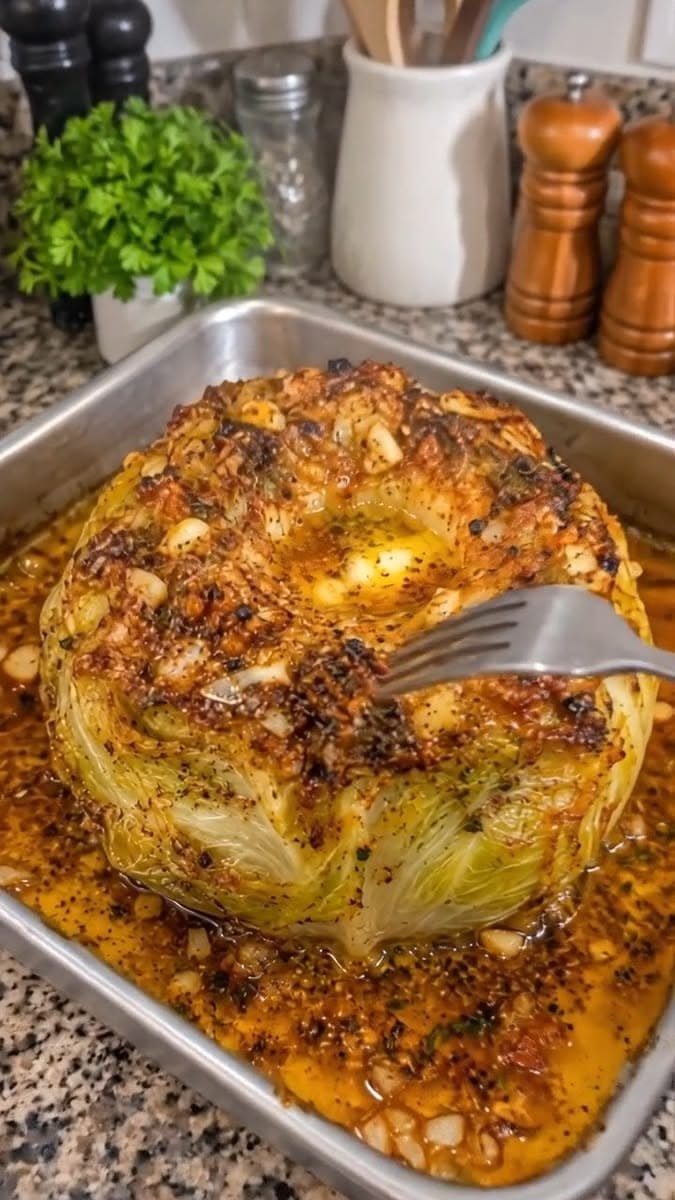
This recipe for oven-roasted garlic butter cabbage is worth trying if you enjoy flavorful, straightforward vegetable dishes. This recipe, which calls for a whole head of cabbage, fresh garlic, butter, olive oil, and a delectable mixture of herbs and spices, turns an ordinary vegetable into a soft, golden, and incredibly flavored side dish.
The cabbage’s outer leaves caramelize wonderfully as it roasts in the oven, absorbing the rich garlic butter seasoning. The inside becomes moist and soft, producing a lovely contrast between the sensitive center and the somewhat crunchy edges. The tasty fluids gathered in the
This recipe is perfect for weeknight dinners, family gatherings, holiday meals, or whenever you want an easy vegetable dish without spending hours in the kitchen. You can serve it alongside roasted chicken, grilled beef, fish, rice, or potatoes. It is also naturally vegetarian when prepared with vegetable-based seasonings and suitable butter.
The best part? You only need a handful of affordable ingredients and a little preparation to make this comforting dish at home.
Preparation time: 15 minutes Cooking time: 60–75 minutes Total time: Approximately 1 hour 30 minutes Servings: 4–6 people Cooking method: Oven roasting
Ingredients
Gather the following ingredients before you begin.
1 large green cabbage, approximately 1–1.5 kg
6 tablespoons unsalted butter, melted
3 tablespoons olive oil
8–10 garlic cloves, peeled and finely chopped
1 teaspoon paprika
1 teaspoon dried oregano
1 teaspoon dried thyme
½ teaspoon freshly ground black pepper
1 teaspoon salt, or to taste
½ teaspoon onion powder
½ teaspoon chili flakes, optional
½ cup vegetable or chicken broth
1 tablespoon lemon juice
2 tablespoons chopped fresh parsley, for garnish
You can adjust the garlic, herbs, and spices according to your taste. If you enjoy a little heat, add extra chili flakes. For a richer flavor, use a combination of butter and olive oil rather than either ingredient alone.
Step-by-Step Instructions
Step 1: Preheat the oven
Set the oven temperature to 190°C (375°F). Before adding the cabbage, let the oven reach the proper temperature. This promotes even cooking of the cabbage and gives the seasoning a deep, roasted flavor.
Select a roasting pan or deep baking dish big enough to accommodate the cabbage. Because it retains the fragrant butter combination and fluid around the cabbage while it cooks, a deeper pan is very useful.
Step 2: Prepare the cabbage
Remove any damaged, wilted, or discolored outer leaves from the cabbage. Rinse the whole cabbage under cool running water and pat it dry with a clean kitchen towel.
Trim only the very bottom of the stem, keeping the core intact. The core helps hold the cabbage together while it roasts, preventing the leaves from separating too much.
Place the cabbage on a cutting board. You can leave it whole, as shown in the reference, or cut a small cross into the top to help the seasoning penetrate more deeply. If the cabbage is particularly large, make a few shallow cuts around the top without cutting all the way through.
Step 3: Make the garlic butter seasoning
In a small mixing bowl, combine the melted butter and olive oil. Add the finely chopped garlic, paprika, dried oregano, dried thyme, black pepper, salt, onion powder, and optional chili flakes.
Stir everything together until the garlic and seasonings are evenly distributed throughout the butter mixture.
Add the lemon juice and mix again. The lemon brings a little brightness to the rich butter and helps balance the sweetness that develops as the cabbage roasts.
Taste a tiny amount of the mixture and adjust the salt or spices if needed. Remember that the cabbage itself is not yet seasoned, so the mixture should be flavorful.
Step 4: Coat the cabbage generously
Place the prepared cabbage in the center of your baking dish. Using a spoon or pastry brush, spread the garlic butter mixture over the top and sides.
Gently separate a few of the outer leaves and spoon some of the seasoning between them. This allows the garlic, herbs, and butter to work their way into the cabbage instead of remaining only on the surface.
Pour the vegetable or chicken broth into the bottom of the baking dish, around the cabbage rather than directly over the seasoned top. The broth helps create moisture during roasting and combines with the melted butter to form a delicious pan sauce.
Step 5: Cover and begin roasting
Cover the baking dish tightly with aluminum foil. Place it in the preheated oven and roast for approximately 40–45 minutes.
During this stage, the trapped heat and steam soften the thick cabbage leaves and help the center cook through. The garlic butter also begins to soak into the cabbage, building flavor throughout the vegetable.
Cooking time will vary depending on the size and density of your cabbage. A smaller head may soften sooner, while a very large one may need additional time.
Step 6: Baste with the flavorful juices
Carefully remove the baking dish from the oven. Watch out for the hot steam when lifting the foil.
Use a large spoon to collect the buttery juices from the bottom of the pan and drizzle them over the top and sides of the cabbage. If possible, spoon some of the liquid between the outer leaves as well.
Basting helps keep the cabbage moist and distributes the garlic and herbs more evenly. If the pan looks completely dry, add a small splash of broth or water before returning it to the oven.
Step 7: Roast uncovered until golden
Remove the foil and return the cabbage to the oven for another 20–30 minutes.
Roast until the outer leaves are golden brown, the edges are lightly caramelized, and the center is tender. The garlic should smell fragrant, and the butter sauce should be bubbling gently around the cabbage.
To check for doneness, insert a small knife into the thickest part of the cabbage. It should slide in easily with little resistance. If the center is still firm, continue roasting for another 10–15 minutes, checking periodically.
For extra color, you can briefly use the oven’s broiler during the final 2–3 minutes. Keep a close eye on it so the garlic does not burn.
Step 8: Finish and serve
Remove the roasted cabbage from the oven and allow it to rest for approximately 5 minutes. This gives the juices a moment to settle and makes the cabbage easier to serve.
Spoon the garlic butter sauce from the baking dish over the top. Sprinkle with freshly chopped parsley and, if desired, add another small squeeze of lemon juice.
Serve the cabbage whole as a centerpiece or cut it into thick wedges at the table. Make sure each serving gets some of the flavorful sauce from the bottom of the pan.
Tips for the Best Results
Keep the core intact: This helps the cabbage hold its shape during cooking.
Do not skimp on seasoning: Cabbage has a mild flavor and benefits from generous garlic, herbs, and spices.
Cover first, uncover later: This softens the interior before the outside develops its golden color.
Avoid burning the garlic: If the chopped garlic starts browning too quickly, spoon a little pan juice over it.
Check tenderness rather than relying only on time: The size of the cabbage determines how long it needs to cook.
Serving Suggestions
This roasted garlic butter cabbage pairs beautifully with roasted chicken, grilled steak, baked fish, mashed potatoes, or steamed rice. For a lighter meal, serve it with a crisp green salad or roasted carrots.
You can also sprinkle grated Parmesan cheese over the cabbage during the final 5 minutes of roasting for a savory, cheesy finish.
Storage and Reheating
Store leftover cabbage in an airtight container in the refrigerator for up to 3–4 days. Reheat it in an oven at 175°C (350°F) until thoroughly hot, adding a splash of broth if the sauce has thickened. You can also reheat individual portions in the microwave, although the cabbage will be softer.
For the best texture, avoid freezing if you want to preserve the cabbage’s original structure, as freezing and thawing can make it noticeably softer.
Final Thoughts
This oven-roasted garlic butter cabbage proves that a simple vegetable can become the star of the dinner table. With tender leaves, fragrant garlic, rich butter, aromatic herbs, and beautifully caramelized edges, it is an easy recipe that delivers plenty of flavor with minimal effort.


