Certain recipes feel like recipes, while other dishes inadvertently become a part of your daily routine.
For me, this beetroot recipe is one of those.
I originally learned about the concept from a friend who always mentioned how much she loved using beetroot into her dishes. To be honest, I had no idea what to anticipate. I was afraid my family would dislike beetroot because of its vivid colour and earthy flavour.
However, I eventually made the decision to try it last weekend.
In the kitchen, I had some cucumber, carrot, fresh ginger, lemon, herbs, and a few beets. Almost on a whim, I assembled everything, created a basic dressing,.
Beetroot Anti-Inflammatory Salad & Lemon-Ginger Dressing
Beetroot (beet) is a nutrient-dense root vegetable rich in betalains, dietary nitrates, fiber, folate, and other plant compounds. Betalains have demonstrated antioxidant and anti-inflammatory activity in laboratory and animal research, while human evidence is still developing and is not strong enough to claim that beetroot “cures inflammation.”
This recipe keeps the beetroot whole rather than turning it into a strained juice, so you retain its dietary fiber.
🥗 Ingredients — 2 servings
- 2 medium fresh beetroot, washed and peeled
- 1 cup cucumber, diced
- 1 small carrot, grated
- ½ cup fresh parsley or coriander, chopped
- 2 tablespoons pumpkin or sunflower seeds
- 1 tablespoon extra-virgin olive oil
- 1 tablespoon fresh lemon juice
- 1 teaspoon grated fresh ginger
- ½ teaspoon ground turmeric
- 1 small garlic clove, finely grated
- Pinch of black pepper
- Small pinch of salt
- Optional: 1 teaspoon honey or maple syrup
👩🍳 Preparation
- Cook the beetroot: Steam or boil the peeled beetroot until fork-tender, approximately 25–40 minutes depending on size. Alternatively, roast at 200°C/400°F for about 40–60 minutes.
- Let it cool slightly and cut into bite-size cubes.
- Combine beetroot, cucumber, carrot, and herbs in a bowl.
- Whisk together olive oil, lemon juice, ginger, turmeric, garlic, black pepper, salt, and optional honey.
- Pour the dressing over the vegetables and toss gently.
- Sprinkle with pumpkin or sunflower seeds.
- Serve immediately or refrigerate for 30–60 minutes for a more developed flavor.
🌿 Why this is considered an anti-inflammatory recipe
The main attraction is beetroot’s betalains, colorful plant pigments that have shown antioxidant and anti-inflammatory activity in preclinical research. Beetroot also contains dietary nitrate, which can increase nitric-oxide availability and has been studied for cardiovascular effects.
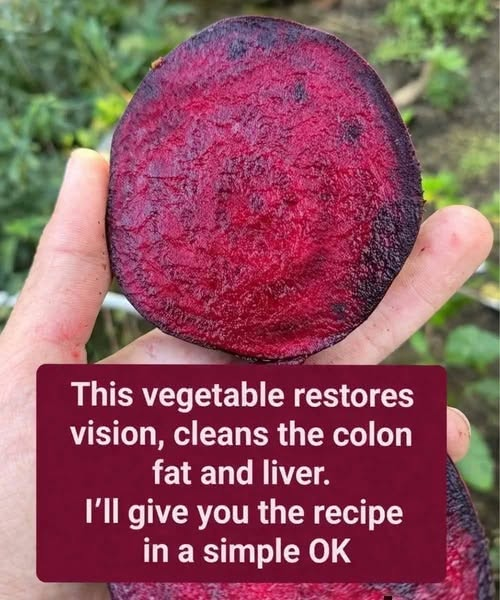
However, it’s important not to oversell the health claims in the viral image: beetroot does not “clean the colon,” remove liver fat, or restore vision by itself. A healthy diet, adequate fiber, physical activity, sleep, and appropriate medical care are much more important for those conditions.
🍽️ Serving suggestions
- Serve as a healthy side dish with grilled chicken, fish, tofu, or lentils.
- Add chickpeas and quinoa to turn it into a high-fiber vegetarian lunch.
- Serve over leafy greens with avocado for a filling salad.
- Pair with Greek yogurt or hummus for additional protein.
- For a breakfast option, use cooked beetroot in a smoothie with berries, plain yogurt, ginger, and lemon.
🔄 Variations
Beetroot Detox-Style Salad:
Add apple, celery, parsley, lemon, and grated ginger.
High-Protein Beet Salad:
Add chickpeas, boiled eggs, grilled chicken, tofu, or feta.
Heart-Healthy Version:
Add walnuts, extra-virgin olive oil, leafy greens, and avocado.
Anti-Inflammatory Smoothie:
Blend cooked beetroot with berries, ginger, lemon juice, plain yogurt, and water. Keep some of the pulp rather than straining it to retain fiber.
Roasted Beetroot Bowl:
Combine roasted beetroot with quinoa, spinach, chickpeas, pumpkin seeds, and a lemon-tahini dressing.
📊 Nutrition highlights
Beetroot provides fiber, folate, vitamin C, B vitamins, minerals, nitrates, betalains, and other polyphenolic compounds.
For this recipe, the exact nutrition depends on the size of the beets, amount of dressing, and optional ingredients. As a general guide, a serving provides:
| Nutrient | Main sources |
|---|---|
| Dietary fiber | Beetroot, carrot, cucumber, seeds |
| Folate | Beetroot, leafy herbs |
| Healthy fats | Olive oil, seeds |
| Plant antioxidants | Beetroot, herbs, turmeric, ginger |
| Dietary nitrates | Beetroot |
| Protein | Seeds; more if chickpeas, tofu, yogurt, or eggs are added |
One harmless side effect worth knowing: eating a substantial amount of beetroot can turn urine or stool reddish/pink (beeturia), which can look alarming but is generally a normal food effect.
❓ Related questions
Does beetroot reduce inflammation?
It contains betalains with promising anti-inflammatory properties, but human clinical evidence remains mixed. A 2024 randomized trial found some changes in oxidative/redox measures from beetroot-derived nitrate but did not find broad improvements across inflammatory markers.
Is beetroot good for gut health?
Whole beetroot supplies dietary fiber, which contributes to a healthy eating pattern. Evidence on beetroot specifically changing the gut microbiome is still emerging.
Can beetroot lower blood pressure?
Dietary nitrate from beetroot can increase nitric-oxide availability, and beetroot has been investigated for cardiovascular and blood-pressure effects. It should complement—not replace—prescribed treatment.
Does beetroot improve eyesight?
Beetroot is nutritious, but there isn’t good evidence that eating beetroot can restore lost vision. Persistent or worsening vision problems should be evaluated by an eye-care professional.
Is beetroot juice better than whole beetroot?
Juice can provide concentrated nitrate, but whole beetroot has the advantage of retaining dietary fiber. For everyday nutrition, either can fit into a balanced diet.
💡 Final thoughts
This beetroot anti-inflammatory salad is best viewed as a flavorful, nutrient-rich addition to an overall healthy diet—not a “detox” or medical treatment. Beetroot’s betalains and nitrates make it an especially interesting vegetable from a nutrition perspective, but claims that it automatically cleanses the liver, cleans the colon, or restores eyesight go beyond the current evidence.