After a hard day, there’s something reassuring about brewing a nice cup of tea. I occasionally make it when I’m in a good mood and want to have a nice drink while talking to family. At other times, when I need a little downtime on a calm weekend, it’s precisely what I reach for.
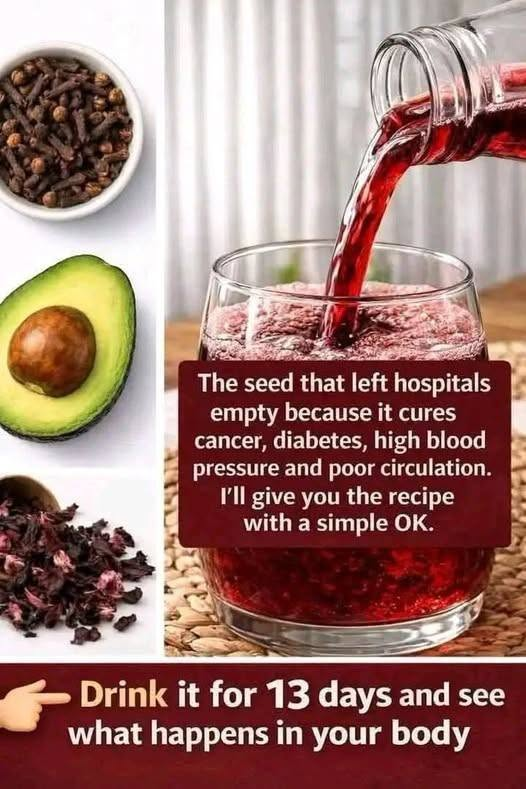
A buddy of mine who likes to experiment with traditional herbal drinks told me about this tea made with avocado seeds, hibiscus, and cloves. I was initially drawn to the stunning ruby-red hue, and the combination of cloves and hibiscus sounded too intriguing to ignore..
Avocado Seed, Hibiscus & Clove Tea: Anti-Inflammatory Herbal Drink Recipe
This viral recipe combines avocado seed, hibiscus (roselle), and cloves in a deep-red herbal tea. It is often promoted online for anti-inflammatory benefits, blood pressure support, antioxidants, circulation, detox, and heart health.
However, an important correction: there is not enough human evidence to say that avocado-seed tea treats cancer, diabetes, hypertension, poor circulation, or other diseases. Research on eating avocado seed in humans remains limited, and its safety has not been adequately established.
Hibiscus is better studied. Clinical trials and meta-analyses suggest that hibiscus beverages may modestly reduce blood pressure in some adults, but they are not a replacement for prescribed blood-pressure medication.
Ingredients
Safer Hibiscus & Clove Version
- 4 cups (950 mL) water
- 2 tablespoons dried hibiscus/roselle calyces
- 3–4 whole cloves
- 1 small piece of cinnamon stick, optional
- 1–2 teaspoons honey, optional
- A squeeze of lemon, optional
What about the avocado seed?
Because human safety data for avocado seed consumption are insufficient, I would not recommend adding avocado seed to a regular beverage. Available research specifically notes that its safety for human consumption remains uncertain.
If you’re interested in the recipe because of the viral image, you can retain the name “Avocado Seed, Hibiscus & Clove Tea”, but it is more responsible to distinguish the traditional/viral formulation from a well-established health treatment.
How to Make It
- Bring 4 cups of water to a gentle boil.
- Add the dried hibiscus and cloves.
- Reduce the heat and simmer gently for about 5–10 minutes.
- Turn off the heat and let it steep for another 5–10 minutes.
- Strain into a cup or glass.
- Add lemon or a small amount of honey if desired.
- Drink warm, or refrigerate and serve over ice.
Serving Suggestion
A reasonable culinary serving is about 1 cup (240 mL). You can serve it hot as an herbal tea or chill it for a refreshing unsweetened iced tea.
Avoid loading it with sugar if your goal is a low-calorie beverage, blood-sugar-conscious diet, or heart-healthy lifestyle.
Potential Benefits
Antioxidants
Hibiscus contains polyphenols and anthocyanins, compounds associated with antioxidant activity.
Blood Pressure Support
This is one of the better-studied potential benefits of hibiscus. A 2022 meta-analysis of 13 randomized trials involving 1,205 participants found that hibiscus significantly lowered systolic and diastolic blood pressure compared with placebo.
That doesn’t mean hibiscus tea should be considered a natural cure for hypertension. The evidence concerns modest changes in blood pressure, and researchers continue to call for better studies on dosage and long-term effects.
Anti-Inflammatory Potential
Hibiscus and cloves contain plant compounds with antioxidant and laboratory anti-inflammatory activity. But saying this drink “cures inflammation” or treats an inflammatory disease would go beyond the available clinical evidence.
Cardiovascular Wellness
Some research suggests hibiscus may have favorable effects on cardiovascular risk markers, including blood pressure and possibly LDL cholesterol.
Nutrition
Because this is an herbal infusion rather than a substantial food, its nutritional contribution is generally small.
Approximate nutrition per 1 cup of unsweetened tea:
| Nutrient | Approximate amount |
|---|---|
| Calories | Very low |
| Protein | Negligible |
| Fat | Negligible |
| Carbohydrates | Very low |
| Added sugar | 0 g |
| Caffeine | Naturally caffeine-free |
| Sodium | Very low |
The exact nutritional profile varies considerably with the amount of hibiscus, cloves, sweetener, and whether ingredients are consumed or merely steeped and strained.
Variations
1. Iced Hibiscus Tea
Prepare the tea normally, refrigerate, then pour over ice with lemon.
2. Ginger-Hibiscus Tea
Add 2–3 thin slices of fresh ginger while simmering.
3. Cinnamon Hibiscus Tea
Add a small cinnamon stick for a warmer, spiced flavor.
4. Citrus Herbal Tea
Add orange or lemon peel during steeping.
5. Sugar-Free Wellness Drink
Skip honey and sugar and use lemon, orange peel, or a small amount of stevia if desired.
Important Safety Considerations
If you take blood-pressure medication, monitor your blood pressure and ask your healthcare professional before consuming concentrated amounts of hibiscus regularly. Hibiscus has demonstrated blood-pressure-lowering effects in clinical research.
Also be particularly cautious with herbal products if you are pregnant or breastfeeding, have kidney/liver disease, take prescription medications, or are managing diabetes or hypertension.
Most importantly, don’t use this tea instead of medication prescribed for high blood pressure, diabetes, cancer, or another medical condition.
The avocado seed deserves special caution: despite its popularity in social-media recipes, evidence regarding its safety in humans is limited.
Frequently Asked Questions
Is avocado seed tea safe?
Its safety has not been adequately established for routine human consumption. Research has identified compounds such as persin in avocado seeds, and available evidence is insufficient to establish a safe everyday dose.
Does hibiscus tea lower blood pressure?
It may modestly lower blood pressure in some people. Several randomized trials and meta-analyses have reported reductions, although hibiscus has not been established as a substitute for antihypertensive medication.
Does this tea cure diabetes?
No. There is insufficient evidence to claim that this drink cures or treats diabetes.
Does it cure cancer?
No. There is no clinical evidence establishing this recipe as a cancer treatment.
Is this an anti-inflammatory drink?
It can reasonably be described as an herbal drink containing antioxidant-rich plant compounds, but “anti-inflammatory” should not be interpreted as meaning that it treats an inflammatory disease.
Can I drink it every day?
For the hibiscus-and-clove version, occasional culinary consumption is different from taking concentrated herbal extracts. If you plan to consume large amounts daily—especially while taking medication—discuss it with a healthcare professional.
Why is the drink red?
Hibiscus calyces contain anthocyanin pigments that give the infusion its characteristic deep red color.
Final Thoughts
The viral “13-day avocado seed tea” recipe makes dramatic claims that aren’t supported by adequate clinical evidence. A more evidence-conscious approach is to enjoy hibiscus and clove tea as a flavorful, caffeine-free herbal beverage, rather than treating it as a detox drink, weight-loss cure, diabetes remedy, cancer treatment, or hypertension medication.