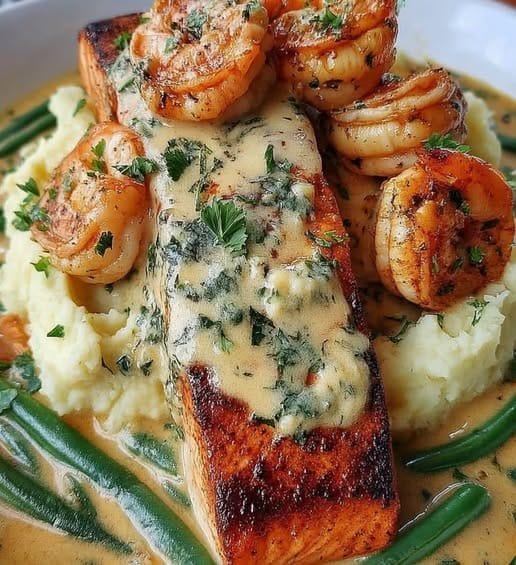
Cajun Shrimp & Salmon with Creamy Garlic Parmesan Sauce — Anti-Inflammatory Inspired
This Cajun Shrimp & Salmon with Creamy Garlic Parmesan Sauce is a restaurant-style high-protein dinner that combines tender salmon, juicy shrimp, garlic, herbs, and a velvety Parmesan sauce. For a more anti-inflammatory-friendly approach, this version uses extra-virgin olive oil, salmon rich in omega-3 fatty acids, garlic, turmeric, herbs, and plenty of vegetables, while keeping added sugar and highly processed ingredients low.
Important: No single recipe can treat or prevent inflammation or disease. “Anti-inflammatory” here refers to an overall eating pattern that emphasizes foods such as fatty fish, vegetables, herbs, spices, and unsaturated fats.
📝 Recipe at a Glance
Prep time: 15 minutes
Cook time: 25 minutes
Total time: 40 minutes
Servings: 4
Cuisine: Cajun-inspired / American
Course: Dinner
Diet style: High-protein, low-carb adaptable, anti-inflammatory-inspired
🌶️ Ingredients
For the Salmon & Shrimp
- 4 salmon fillets, about 5–6 oz each
- 1 lb large shrimp, peeled and deveined
- 1½ tbsp extra-virgin olive oil
- 1½ tsp smoked paprika
- 1 tsp Cajun seasoning, preferably low-sodium
- ½ tsp turmeric
- ½ tsp garlic powder
- ½ tsp onion powder
- ¼ tsp black pepper
- ¼ tsp cayenne pepper, optional
- ½ tsp dried oregano
- ½ tsp dried thyme
- 1 tbsp fresh lemon juice
For the Creamy Garlic Parmesan Sauce
- 1 tbsp extra-virgin olive oil
- 4 garlic cloves, finely minced
- ½ cup low-sodium chicken or vegetable broth
- ¾ cup heavy cream
- ½ cup freshly grated Parmesan cheese
- 2 cups fresh spinach
- 1 tsp Italian seasoning
- ½ tsp turmeric
- ¼ tsp black pepper
- 1 tbsp fresh parsley, chopped
- 1 tbsp fresh lemon juice
- Red pepper flakes, optional
Optional Vegetables
For an even more nutrient-dense dinner, add:
- 1 cup sliced mushrooms
- 1 cup zucchini
- ½ cup cherry tomatoes
- 1 cup broccoli
- ½ sliced bell pepper
👩🍳 How to Make It
1. Season the seafood
Pat the salmon and shrimp dry with paper towels.
Combine the smoked paprika, Cajun seasoning, turmeric, garlic powder, onion powder, black pepper, cayenne, oregano, and thyme.
Rub about half of the mixture onto the salmon. Toss the shrimp with the remaining seasoning.
2. Sear the salmon
Heat 1 tablespoon olive oil in a large skillet over medium-high heat.
Place the salmon skin-side down if the fillets have skin.
Cook for approximately 4–5 minutes, then carefully flip and cook another 3–4 minutes, depending on thickness.
Transfer the salmon to a plate.
For food safety, cook salmon to an internal temperature of 145°F (63°C).
3. Cook the shrimp
Add the shrimp to the same skillet.
Cook for approximately 1–2 minutes per side, until pink and opaque.
Remove and set aside.
Avoid overcooking—the shrimp should be tender rather than rubbery.
4. Build the garlic sauce
Reduce the heat to medium.
Add 1 tablespoon olive oil and the minced garlic.
Cook for about 30 seconds, just until fragrant.
Add the broth and scrape up the flavorful browned bits from the bottom of the skillet.
Pour in the heavy cream.
Add turmeric, Italian seasoning, black pepper, and red pepper flakes if desired.
Simmer gently for 2–3 minutes.
5. Add Parmesan and spinach
Lower the heat.
Gradually stir in the Parmesan until melted and smooth.
Add the spinach and cook until wilted.
Finish with fresh lemon juice and parsley.
Tip: Don’t boil the sauce aggressively after adding Parmesan. Gentle heat helps keep the sauce smooth.
6. Bring everything together
Return the salmon and shrimp to the skillet.
Spoon the creamy garlic Parmesan sauce over the seafood.
Garnish with fresh parsley, a squeeze of lemon, and a light sprinkle of Parmesan.
Serve immediately.
🥑 Why This Recipe Can Fit an Anti-Inflammatory Eating Pattern
The strongest nutritional feature is the salmon, which provides omega-3 fatty acids, particularly EPA and DHA.
Other ingredients contribute to a nutrient-dense eating pattern:
- Salmon: omega-3 fats and high-quality protein
- Shrimp: lean protein and several micronutrients
- Extra-virgin olive oil: predominantly monounsaturated fat and antioxidant compounds
- Garlic: contains sulfur-containing compounds
- Turmeric: contains curcuminoids
- Spinach: provides folate, vitamin K, carotenoids, and other nutrients
- Fresh herbs: add flavor without requiring large amounts of salt
- Lemon: adds acidity and bright flavor without added sugar
For an even more Mediterranean-diet-inspired meal, serve it with a large portion of colorful vegetables and whole grains.
🍽️ Serving Suggestions
Low-Carb Dinner
Serve the salmon and shrimp over:
- Cauliflower rice
- Zucchini noodles
- Sautéed spinach
- Roasted broccoli
- Asparagus
Balanced Healthy Dinner
Pair with:
- ½–1 cup cooked quinoa
- Roasted vegetables
- A simple green salad
- Lemon and olive-oil dressing
Mediterranean-Inspired Meal
Try:
- Quinoa or farro
- Cucumber and tomato salad
- Kalamata olives
- Fresh parsley
- Lemon-olive oil dressing
Meal Prep
Divide the seafood and sauce into four airtight containers.
Add roasted vegetables or quinoa and refrigerate.
For the best texture, gently reheat rather than microwaving at full power for an extended period.
🔄 Healthy Variations
1. Dairy-Free Version
Replace heavy cream with unsweetened coconut milk or an unsweetened dairy-free cream alternative, and replace Parmesan with nutritional yeast or a dairy-free Parmesan substitute.
2. Lower-Calorie Version
Use:
- Half-and-half instead of heavy cream
- More broth
- Extra spinach and vegetables
- Less Parmesan
The sauce will be lighter while retaining plenty of flavor.
3. High-Protein Version
Increase the shrimp to 1¼–1½ lb and serve with vegetables or quinoa.
4. Extra-Spicy Cajun Version
Add:
- Cayenne pepper
- Red pepper flakes
- Hot sauce
- Extra smoked paprika
5. Mediterranean Version
Reduce the Cajun seasoning and add:
- Oregano
- Basil
- Lemon zest
- Tomatoes
- Spinach
- Kalamata olives
6. Gluten-Free Version
The basic recipe is naturally adaptable to gluten-free eating. Check the label on your Cajun seasoning and broth to ensure they are certified or labeled gluten-free if needed.
📊 Approximate Nutrition
Per serving, assuming 4 servings and the ingredients above:
| Nutrient | Approximate amount |
|---|---|
| Calories | 650–700 kcal |
| Protein | 55–60 g |
| Fat | 42–46 g |
| Saturated fat | 16–19 g |
| Carbohydrates | 8–12 g |
| Fiber | 1–2 g |
| Sugar | 2–4 g |
| Sodium | ~800–1,100 mg* |
*Sodium varies substantially according to the Cajun seasoning, broth, Parmesan, and added salt.
Nutrition is an estimate, not a laboratory analysis. Actual values depend on salmon size, shrimp size, brands, and exact ingredient quantities.
💡 Tips for the Best Results
Don’t overcook the salmon. Thick fillets may need more time than thin ones.
Use freshly grated Parmesan. It generally melts more smoothly into a cream sauce than some pre-shredded varieties.
Choose low-sodium Cajun seasoning. This gives you considerably more control over the final sodium content.
Use fresh lemon at the end. The acidity cuts through the richness of the cream and Parmesan.
Don’t overcrowd the pan. If necessary, cook the shrimp in batches so they sear instead of steaming.
Add vegetables generously. This is one of the easiest ways to turn a rich seafood entrée into a more balanced healthy dinner.
❓ Related Questions
Is Cajun Shrimp & Salmon healthy?
It can be part of a healthy diet because it provides substantial protein and nutrient-rich seafood. The creamy Parmesan sauce, however, makes it relatively calorie- and saturated-fat-dense, so portion size and the rest of the meal matter.
Is salmon good for an anti-inflammatory diet?
Salmon is particularly useful in an anti-inflammatory-style eating pattern because it provides EPA and DHA omega-3 fatty acids. It is best considered one component of an overall dietary pattern rather than a treatment for inflammation.
Can I make this recipe without heavy cream?
Yes. Use half-and-half, evaporated milk, unsweetened coconut milk, or additional broth for different textures and calorie levels.
Can I use frozen shrimp?
Absolutely. Thaw frozen shrimp completely and pat them dry before seasoning and cooking.
What vegetables go best with Cajun salmon and shrimp?
Broccoli, asparagus, spinach, zucchini, bell peppers, mushrooms, and cauliflower all work particularly well.
Can I make this recipe ahead?
Yes, although seafood is generally best freshly cooked. Store leftovers promptly in the refrigerator and reheat gently to avoid drying out the salmon and shrimp.
What makes this recipe SEO-friendly for a food blog?
Natural search terms that fit this recipe include healthy salmon recipe, Cajun shrimp recipe, high-protein dinner, easy seafood dinner, low-carb dinner, creamy garlic Parmesan sauce, anti-inflammatory foods, omega-3 rich foods, healthy dinner ideas, Mediterranean diet recipes, meal prep recipes, and easy weeknight dinner. These keywords are most effective when used naturally rather than repeated excessively.
💰 High-CPM Content Angles for a Food Blog
If you’re publishing this recipe online, useful commercial-intent topics can include:
- Healthy meal prep
- High-protein recipes
- Weight management recipes
- Low-carb dinner ideas
- Mediterranean diet recipes
- Heart-healthy eating
- Healthy grocery shopping
- Kitchen appliances and cookware
- Meal planning
- Nutrition and wellness
- Family-friendly healthy dinners
- Budget-friendly meal prep
The key is to keep these topics genuinely relevant to the recipe rather than stuffing unrelated keywords into the article.
🥘 Final Thoughts
This Cajun Shrimp & Salmon with Creamy Garlic Parmesan Sauce is a flavorful way to turn simple seafood into an impressive weeknight dinner. The combination of omega-3-rich salmon, lean shrimp, garlic, herbs, spinach, olive oil, and lemon makes it especially suitable for a nutrient-conscious eating pattern.